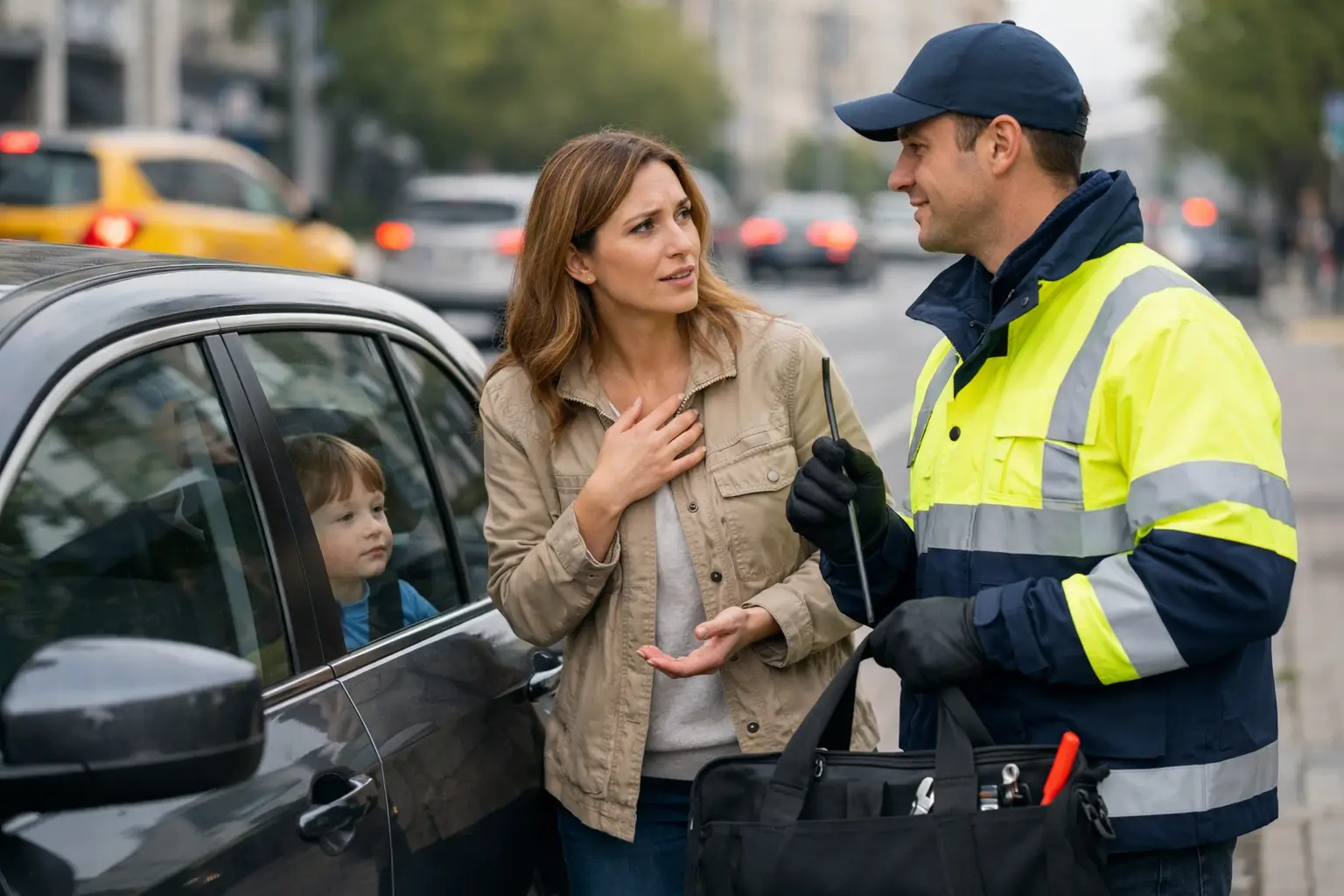
Locked Out With Child Inside? Act Fast, Stay Calm
Locked out with child inside is not a normal lockout. It is a time-sensitive safety situation, especially in South Florida heat, near traffic, or when a young child cannot open the door. Your first job is not forcing the lock. It is getting help moving while you stay close enough to monitor your child.
If there is any immediate danger, call 911 now. A child who is unresponsive, distressed, exposed to heat, near a running vehicle, or trapped in a home with a stove, pool access, medication, or another hazard needs emergency responders right away. A locksmith can restore entry, but police and fire rescue are the right first call when a child’s health or safety may be at risk.
Locked Out With Child Inside: Your First 5 Minutes
Take one breath and look through every safe viewing point available. Can you see your child? Are they awake, calm, and away from obvious hazards? Can you speak to them through a door, window, or a slightly open opening? Those details help you decide whether you need 911 immediately or urgent locksmith service alongside other support.
Call emergency services without waiting if the child is an infant or very young, cannot respond to you, appears overheated, is crying intensely, has access to danger, or is locked inside a vehicle. Heat builds rapidly in parked cars, even when the weather does not feel extreme. Never assume cracking a window or parking in shade makes a vehicle safe.
If the child appears safe and you can maintain contact, call a licensed mobile locksmith for emergency entry. Explain clearly that a child is inside, whether this is a car, house, apartment, or business, and whether any hazard is present. That lets the dispatcher prioritize the call and send the right technician and equipment.
Stay at the location. Do not leave to find a spare key unless another responsible adult can remain there to watch and communicate with the child. If possible, ask a neighbor, building manager, family member, or passerby you trust to stay with you while help is on the way.
Do Not Turn a Lockout Into an Injury
The urge to act fast is understandable. But several common reactions can make the situation worse, delay entry, or cause a serious injury.
Do not break a window unless emergency responders specifically direct you to do so or there is an immediate, life-threatening danger with no faster option. Broken glass can injure a child standing nearby and creates a difficult, dangerous opening to climb through. Do not try to pry a car door, force a residential lock, or use wire tools found online. Modern vehicles have sensitive weather stripping, wiring, airbags, and electronic lock systems. A forced entry attempt can cause expensive damage and still fail to open the door.
Avoid asking a child to operate locks, climb onto furniture, use a chair, or reach for keys. Even an older child may panic or misunderstand instructions. Keep your voice calm and simple: tell them you are right outside, help is coming, and they should move away from doors, windows, heat, and anything dangerous.
If you are locked out of a home, do not shut off your phone battery by repeatedly calling multiple people at once. Make the necessary emergency call, arrange professional entry, and keep your phone available for updates. Turn on speakerphone if you need both hands free to watch or communicate with your child.
When It Is a Car Lockout
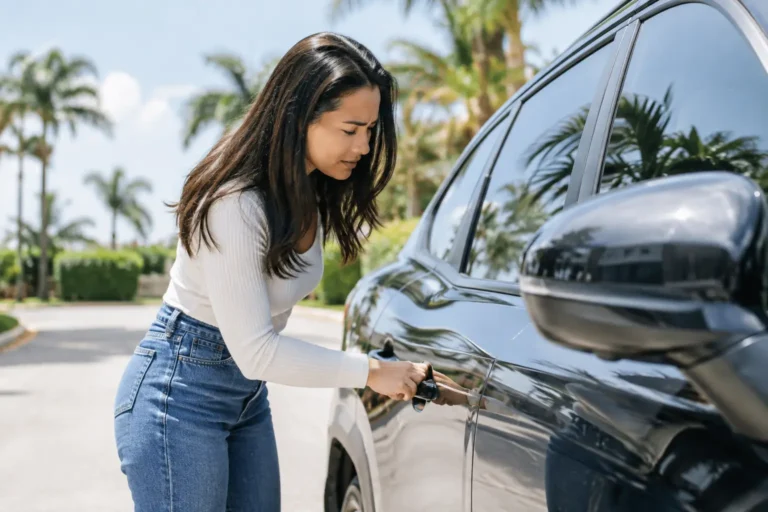
A child locked in a vehicle requires extra urgency. Call 911 at once when the car is running, the air conditioning is off or unreliable, the child is very young, the vehicle is in direct sun, or you see any sign of distress. Tell the dispatcher the vehicle’s location, make and color, whether the engine is running, and what you can see inside.
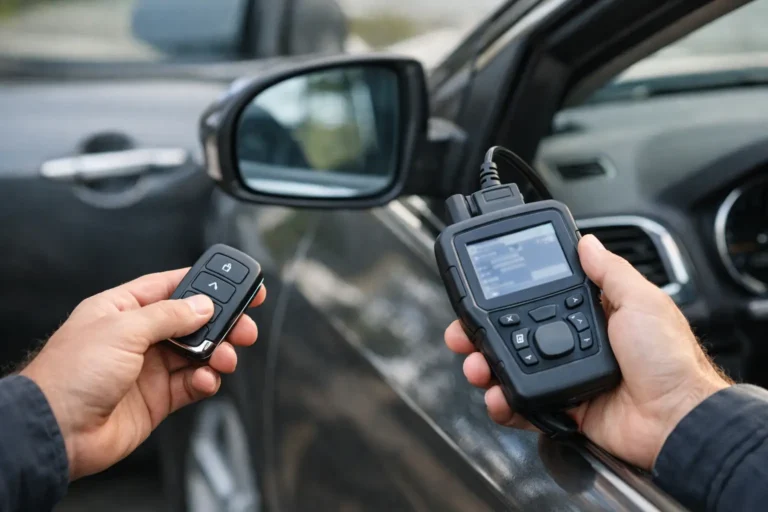
If the vehicle is safely parked and the child is alert, emergency locksmith service may be able to open the car without damaging the lock, door frame, or glass. A trained automotive locksmith uses proper vehicle-entry methods and assesses the vehicle before starting. This matters because each make and model has different lock mechanisms, side-curtain airbag locations, and electronic systems.
Do not rely on an app, remote feature, or roadside service as your only plan if the child is in danger. Those options may work, but they can involve account verification, weak signal, a dead phone, delayed dispatch, or a vehicle system that is not responding. Start the fastest appropriate response first.
Information That Speeds Up Mobile Service
A locksmith can dispatch more effectively when you provide the exact location, the type of lockout, the vehicle year, make, and model if applicable, and a brief description of the child’s condition. Mention apartment gates, parking garages, security checkpoints, or difficult access points before the technician arrives.
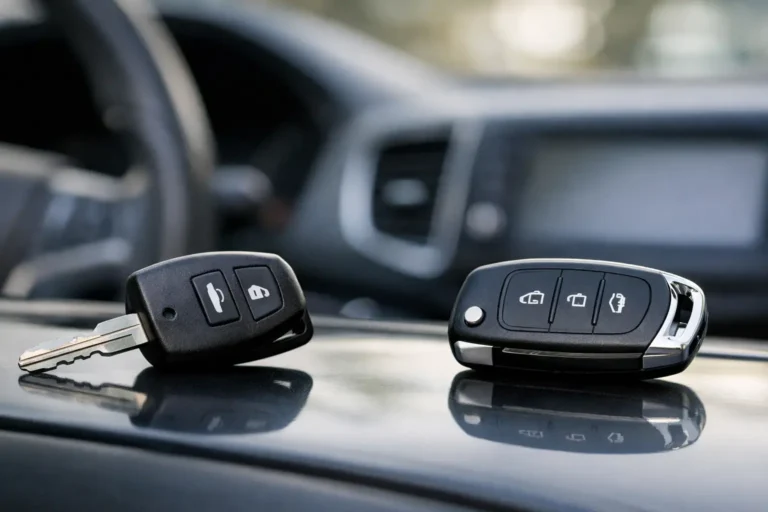
For a home lockout, say whether you have a deadbolt, smart lock, keypad, or damaged key. For a vehicle, let the technician know if keys are visible inside, if the key fob battery is dead, or if the door was locked while the engine was running. Clear details reduce wasted time at the scene.
What a Professional Locksmith Can Do
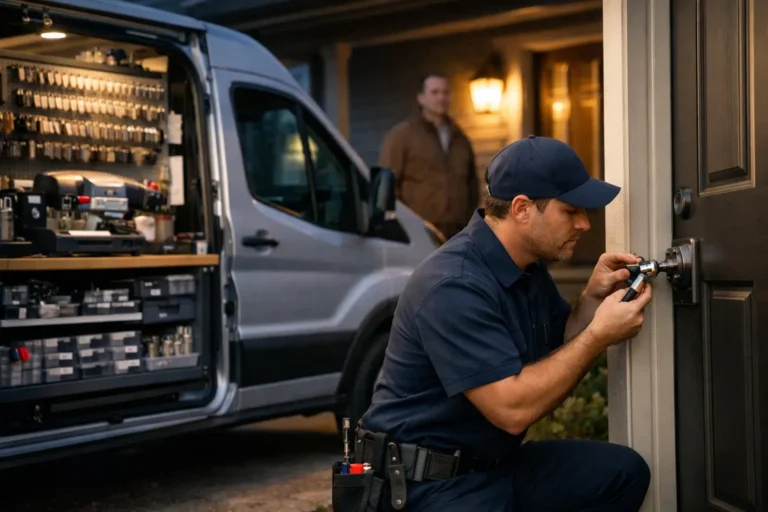
For a non-life-threatening emergency, a qualified locksmith can often restore access with methods designed to minimize damage. The approach depends on the lock, property, and conditions at the scene. In many cases, entry can be gained without drilling or replacing hardware. In other cases, a damaged, high-security, or malfunctioning lock may require a different solution.
That is why the cheapest quote is not always the best choice. Ask whether the locksmith is licensed and insured, whether they provide upfront pricing, and whether they can handle your specific vehicle or lock type on site. A legitimate technician should verify that you are authorized to enter the car or property once the immediate safety concern is addressed.
Precise Locksmith LLC provides mobile emergency locksmith assistance for customers in Miami-Dade communities including Hialeah, Doral, Miami Lakes, and nearby areas. When you call, state immediately that a child is inside so the team understands the urgency and can guide the dispatch process.
Keep Your Child Calm While Help Is Coming
Your tone matters. Children often react to the fear they hear in an adult’s voice. Speak slowly, use short instructions, and avoid promising an exact arrival time you do not know.
Tell them where you are and what to do next. For example, ask them to sit on the floor away from the door, stay where you can see them, or hold a favorite item. If they can hear you but cannot see you, keep talking so they know they are not alone.
For a child inside a car, ask them to stay seated and away from the front controls if they are old enough to understand. Do not ask them to press buttons, pull handles, or start the vehicle. If a window is partly open, use it only to communicate and check on them – do not attempt an unsafe entry through a narrow opening.
After You Get Back Inside
Once the door is open, check your child first. If they are hot, lethargic, confused, injured, or unusually quiet after being trapped in a vehicle or hot space, seek medical attention immediately. Trust your instincts. It is better to have a child evaluated than to overlook heat stress or another problem.
Then identify what caused the lockout. A weak key fob battery, worn house key, faulty latch, self-locking door, damaged ignition, or unreliable smart lock can create the same emergency again. A locksmith can assess the issue, cut or program a spare key, repair a damaged lock, or advise when replacement is the safer choice.
Keep a tested spare key with a trusted nearby person or in a secure, approved location. For vehicles, replace weak fob batteries early and keep a backup key where it is accessible but not inside the locked car. Small precautions will not prevent every emergency, but they can reduce the chances of facing one with your child on the other side of the door.
When a child is locked inside, fast action and calm decisions matter more than a quick DIY fix. Call 911 whenever there is danger, get professional entry help moving right away, and stay present until your child is safely back with you.