Keyless Entry Troubleshooting Guide for Drivers
Your key fob worked when you parked. Now you are standing beside your car, pressing the button repeatedly, and nothing happens. Before assuming the worst, use this keyless entry troubleshooting guide to narrow down the problem safely. Some issues take a two-minute fix. Others point to a damaged fob, a vehicle battery problem, or a programming fault that needs a mobile automotive locksmith.
The key is not to force anything. Repeated button presses, prying at a door handle, or using a metal object near the fob can turn a simple battery issue into a more expensive repair.
Start With the Fast Checks
First, get close to the vehicle. Stand beside the driver’s door, then try the fob again. A weak fob battery can shorten the signal range long before it stops working completely. If it only works when held next to the door or steering column, the battery is the most likely cause.
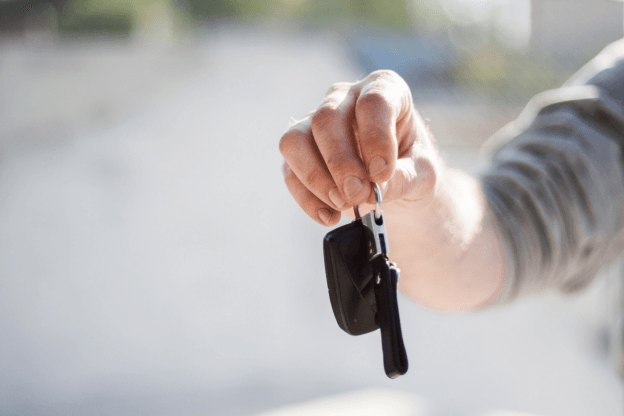
Next, try every button on the remote. If the lock button fails but the trunk or panic button still responds, the problem may be one worn button rather than the whole fob. If no button works, test a spare key fob if you have one. A working spare immediately tells you that the vehicle is likely fine and the original fob needs attention.
Also look at the vehicle itself. Are the interior lights dim? Does the horn sound weak? Does the dashboard stay dark when you open the door? A drained car battery can prevent power locks and keyless entry from responding, even with a good fob in your hand.
Keyless Entry Troubleshooting Guide: Find the Cause
Most keyless entry failures fall into a few common categories. The symptoms matter because they help determine whether you need a new battery, key repair, vehicle service, or programming.
The key fob battery is dead or weak
This is the most common issue and usually the least expensive one. Key fobs often use small coin-cell batteries. Depending on the vehicle and how often the remote is used, those batteries may last several years, but heat, age, and frequent use can shorten that lifespan.
A weak battery may cause inconsistent operation. The fob might work from a few feet away but not from across a parking lot. It may work after several presses or only at certain angles. Replace the battery with the exact type specified for your remote, and install it with the correct positive and negative orientation.
Be careful opening the fob case. Some remotes have small clips that can crack if pried apart too aggressively. If the case is damaged, the circuit board can be exposed to moisture and dirt. When in doubt, have a locksmith replace the battery and inspect the fob at the same time.
The remote itself is damaged
Key fobs take a beating. They get dropped on pavement, left in hot cars, soaked in rain, and carried loose with coins and tools. A cracked shell is not always just cosmetic. The buttons, battery contacts, antenna, or internal circuit board may be damaged.
Signs of physical damage include a loose battery, buttons that feel soft or stuck, corrosion inside the battery compartment, or a fob that works only when squeezed in a certain spot. Do not tape the fob together and assume it is reliable. It may leave you stranded again at the worst possible time.
A qualified automotive locksmith can often repair a damaged housing, replace worn buttons, or determine whether the fob needs replacement. In many cases, a replacement remote must also be programmed to the vehicle before it will work.
The car battery or door lock system has a problem
If neither of your key fobs works, do not immediately buy two new remotes. The issue may be in the car. A weak or dead vehicle battery, blown fuse, failed door lock actuator, or wiring problem can stop the keyless entry system from responding.
Use the mechanical emergency key inside the fob, if your vehicle has one, to enter the car. Many modern fobs contain a small release latch that removes a metal key blade. Your owner’s manual can show the exact location of the hidden key slot, which may be behind a small cover on the driver’s door handle.
Once inside, check whether the dashboard powers on normally. If the car has no electrical response, arrange battery or roadside assistance. If the car starts but one door does not respond to the power locks, that door may have an actuator or latch issue rather than a key fob issue.
The fob lost programming
Programming problems are more likely after a fob battery was removed for a long period, the remote was replaced, the vehicle battery went dead, or the fob was exposed to water or impact. In some vehicles, the fob may still allow entry but fail to start the car. In others, none of the remote functions will work.
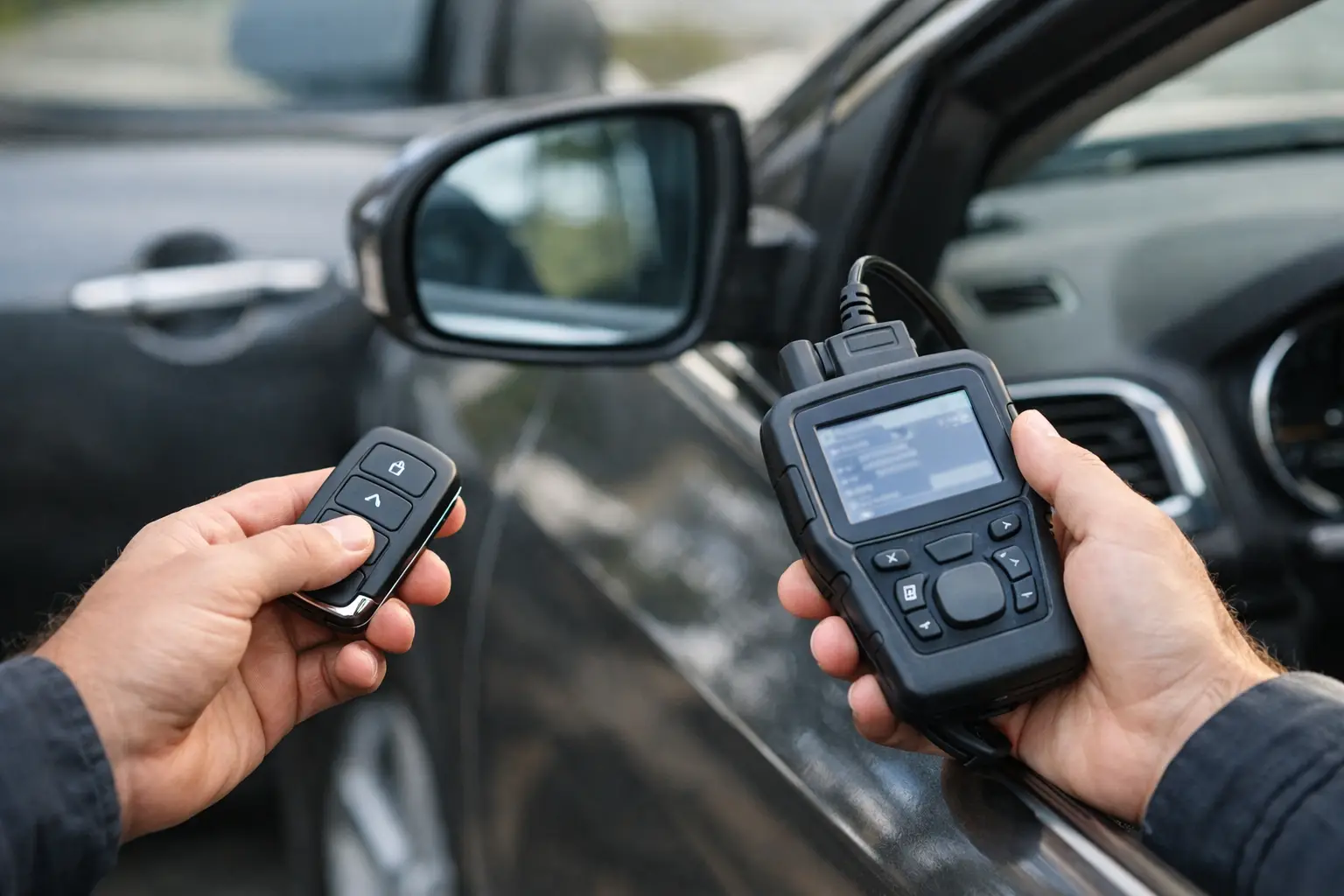
Online reset instructions can be misleading because procedures vary by year, make, trim level, and security system. A sequence that works for one model can do nothing on another. Some newer vehicles require professional diagnostic equipment and security authorization to program a key or smart fob correctly.
If a replacement fob is needed, avoid assuming that any remote with a similar appearance will work. The frequency, chip type, button configuration, and programming method must match your vehicle. A mobile locksmith can identify the correct remote, cut an emergency key if necessary, and program the replacement on-site.
Signal interference is blocking communication
Signal interference is less common, but it happens. Your fob may act strangely near airports, hospitals, government buildings, large electronic systems, or certain parking garages. A nearby device can interfere with the radio signal between the remote and vehicle.
Move the car or walk several yards away and test the fob again. Remove the remote from a crowded key ring, especially if it is pressed against another electronic device. If it starts working once you change locations, the fob may be fine. If it fails everywhere, look back to the battery, fob damage, or vehicle system.
What Not to Do When Your Fob Stops Working
A keyless entry issue is frustrating, especially when you are late for work, carrying groceries, or parked somewhere unfamiliar. Still, avoid shortcuts that damage the vehicle or create a security problem.
Do not force the door handle, pry around the lock cylinder, smash a window, or try to bypass the ignition. Do not keep pressing the panic button if the car is in a crowded area. And do not leave a broken fob inside the vehicle while you search for help, particularly if the doors are not secure.
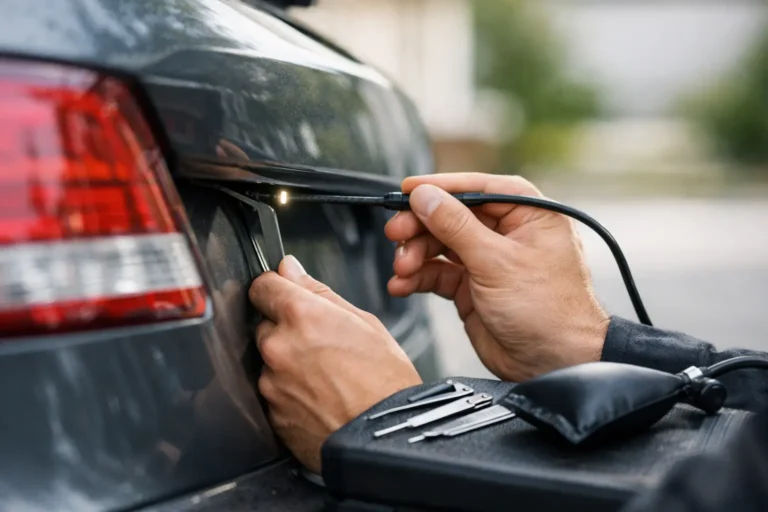
If the key is stuck in the ignition, the remote is damaged, or the doors will not respond at all, professional help is usually the safer and faster option. The right technician can open the vehicle without unnecessary damage, test the key and lock system, and provide a clear answer about what failed.
When to Call a Mobile Automotive Locksmith
Call for professional help when you have no working spare, the fob has water or impact damage, a replacement needs programming, the car will not recognize the smart key, or you are locked out with a dead vehicle battery. These are situations where guessing can cost more time than a proper diagnosis.
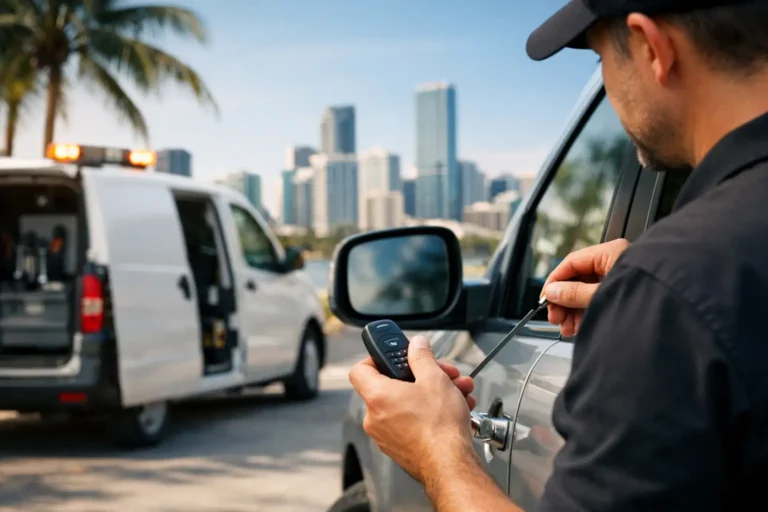
For drivers in Miami-Dade, Precise Locksmith LLC provides mobile automotive locksmith service where the problem happens. That means you do not need to tow the vehicle to a shop just to test a key fob, replace a lost remote, or program a new key. A trained technician can inspect the issue, explain the available options, and complete the needed work on location when possible.
If your keyless entry problem is happening right now, keep your vehicle secure, use your spare key if available, and get help before the situation turns into a full lockout. A fast diagnosis is often the difference between a minor fob repair and a long day stuck in a parking lot.