How to Identify Transponder Keys Before You Get Stranded
A car key can look ordinary and still be the reason your vehicle will not start. If you are trying to figure out how to identify transponder keys, do not rely on the key blade alone. Many chipped keys look almost identical to standard metal keys, but they communicate with your vehicle’s immobilizer system before the engine is allowed to run.
Knowing what type of key you have can save time when you need a duplicate, lose your only key, or face a no-start problem in a parking lot. It also helps you avoid ordering the wrong replacement and finding out later that it cannot start the car.
What Is a Transponder Key?
A transponder key has a small electronic chip built into the head of the key. When you insert the key into the ignition or bring it close to the vehicle’s start system, the car reads that chip. If the code matches the vehicle’s immobilizer, the engine can start.
The chip does not usually need a battery. It receives a signal from the vehicle and sends back its programmed identification code. That is why a transponder key can still work even if it has no buttons, no remote functions, and no visible electronics.
This security feature became common on many vehicles from the late 1990s forward. The exact year depends on the make and model. Some older cars use a basic metal key, while newer vehicles may use a chip key, remote-head key, key fob, smart key, or proximity remote.
How to Identify Transponder Keys by Looking at Them
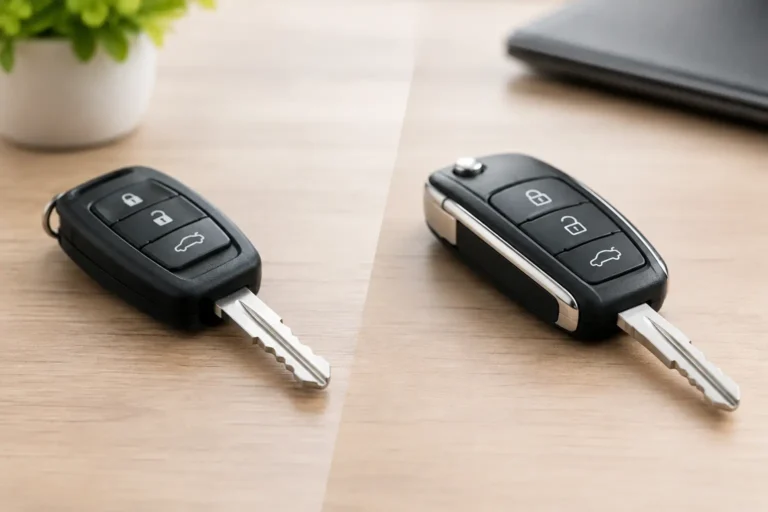
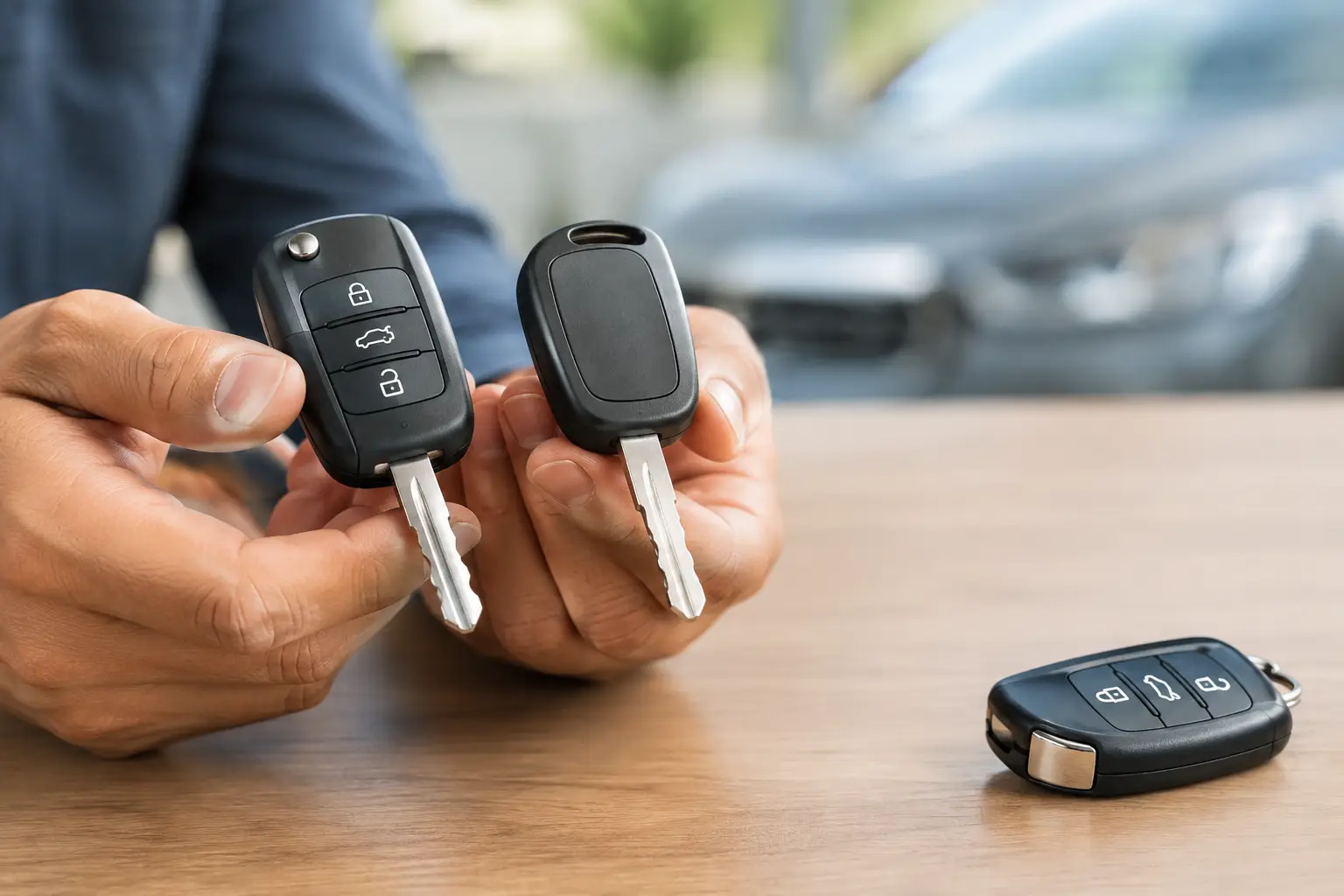
Start with the head of the key, not the metal blade. A standard mechanical key often has a thin, flat metal head or a simple plastic grip. A transponder key usually has a thicker plastic head because it needs room for the chip.
Look for a molded plastic section near the top of the key. It may be black, gray, or color-matched to the vehicle brand. Some keys have a large rectangular head, while others have a small rounded head that does not look especially high-tech. Thickness is a clue, but it is not proof by itself.
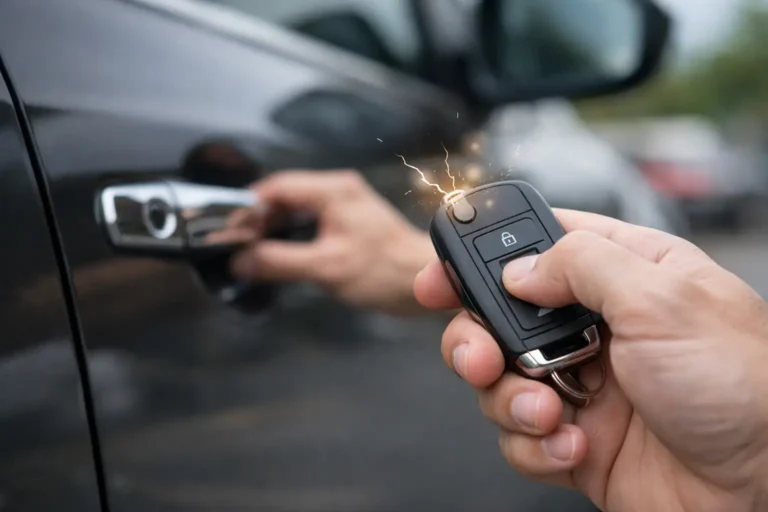
A key with lock and unlock buttons is often a remote-head transponder key. In many cases, the remote buttons and the immobilizer chip are housed in the same key head. However, a separate remote fob does not automatically mean the metal key has a transponder chip. Some vehicles use a basic ignition key plus a separate remote for the doors.
If your key is all metal with no plastic head, it may be a standard key. Still, do not assume. A few vehicle systems use unusually small chips or specialized designs that are not easy to recognize from appearance alone.
Check for Factory Markings
Manufacturer logos, part numbers, and letters molded into the key head can offer useful clues. You may see a vehicle emblem, a code, or wording such as “PK3,” “chip,” or “transponder” on certain replacement keys. These markings can help a locksmith identify the key type, but they are not always present.
Aftermarket replacements can be even harder to judge. They may have a plain black head with no logo at all, even when they contain a working chip. If the key was made at a hardware store or purchased online, visual inspection has limits.
The Most Reliable Ways to Tell if Your Key Has a Chip
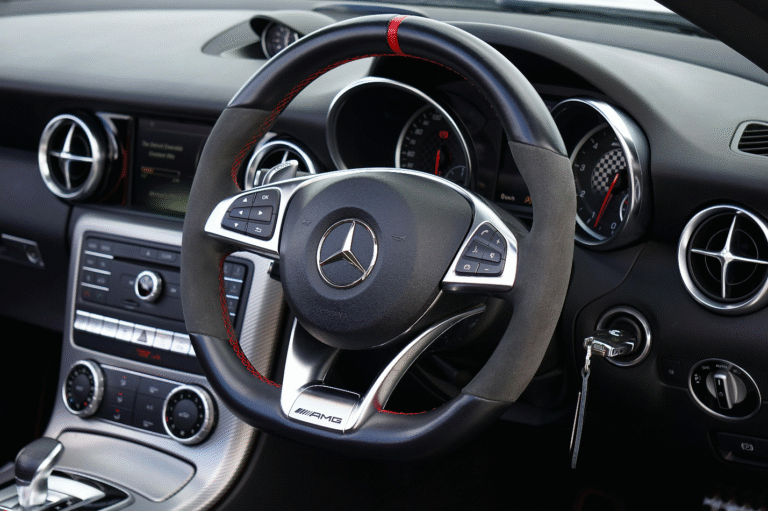
The quickest answer often comes from the vehicle itself. If your car has an immobilizer or security indicator on the dashboard, it likely uses a transponder system. Look for a warning light shaped like a key, lock, or car with a lock symbol. The light may illuminate briefly when you turn the ignition on.
If you have a second key, compare it with the key in question. If both keys start the vehicle and have similar plastic heads, they are likely transponder keys. If one key unlocks the door and turns the ignition but the engine will not start, the chip may be missing, damaged, or not programmed.
Your owner’s manual may also identify the key system. Search the sections covering keys, immobilizers, theft deterrent systems, or starting the vehicle. Keep in mind that manuals sometimes cover several trim levels, so the information may not apply to every version of the vehicle.
A professional automotive locksmith can verify the answer without guesswork. Using key identification references and programming equipment, a technician can determine whether your vehicle requires a transponder chip, what chip type it uses, and whether a replacement must be programmed before it will work.
Signs You May Have a Transponder Key Problem
A chipped key can fail in a way that feels confusing. The key may turn normally in the ignition, the dashboard may light up, and the engine may crank, but the vehicle will not start or runs for only a second before shutting off. That is a common immobilizer-related symptom.
You may also see a flashing security light when trying to start the car. In some vehicles, the security light stays on rather than going out after the key is recognized. These signs do not always mean the key is the problem. A weak vehicle battery, ignition issue, fuel problem, or other mechanical fault can cause no-start symptoms too.
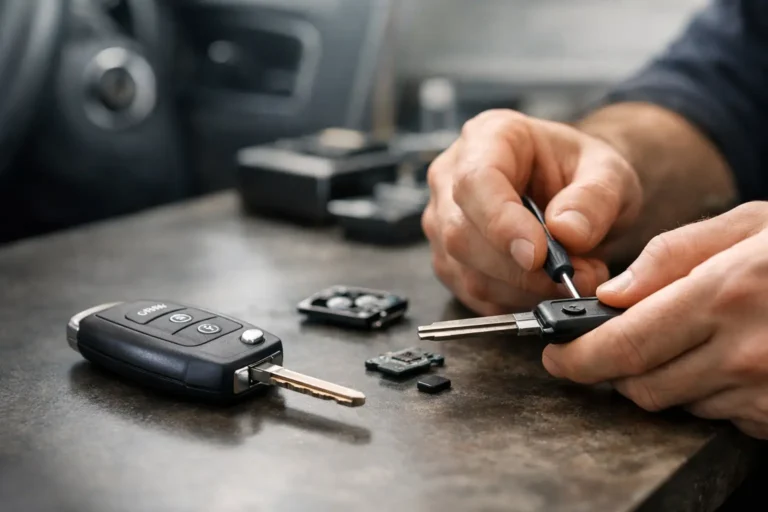
Damage to the key head is another warning sign. If the plastic head is cracked, separated, water-damaged, or has been run over, the chip inside may be broken. A worn metal blade can create a different issue: it may not turn smoothly in the ignition even if the chip is fine.
Do not tape a broken key head together and treat it as a permanent fix. It might start the car today, but the chip can shift, crack further, or stop communicating without warning. Making a tested backup key is usually less stressful and less expensive than waiting until the only working key fails.
Why a Metal Copy May Not Start Your Car
This is where many drivers get caught off guard. A basic metal duplicate can be cut to match your original key perfectly. It may unlock the doors and even turn the ignition cylinder. But if it does not include the correct transponder chip and programming, the immobilizer will block the engine from starting.
Think of the blade and the chip as two separate requirements. The blade must physically fit the lock and ignition. The chip must electronically match the car. Both must be correct for most transponder-equipped vehicles.
The programming process depends on the vehicle. Some older models allow limited self-programming when you already have working keys. Many newer vehicles require professional diagnostic equipment, security access procedures, or a programmed remote that matches the vehicle exactly. The wrong chip type, incorrect key blank, or incomplete programming can leave you with a key that looks right but does not work.
When You Need a Locksmith Instead of a Store Copy
A store can often duplicate a basic metal key. For a transponder key, remote-head key, or smart key, you need more than a cut blade. You need the right key or fob, correct programming, and a full test of the lock, ignition, and start function.
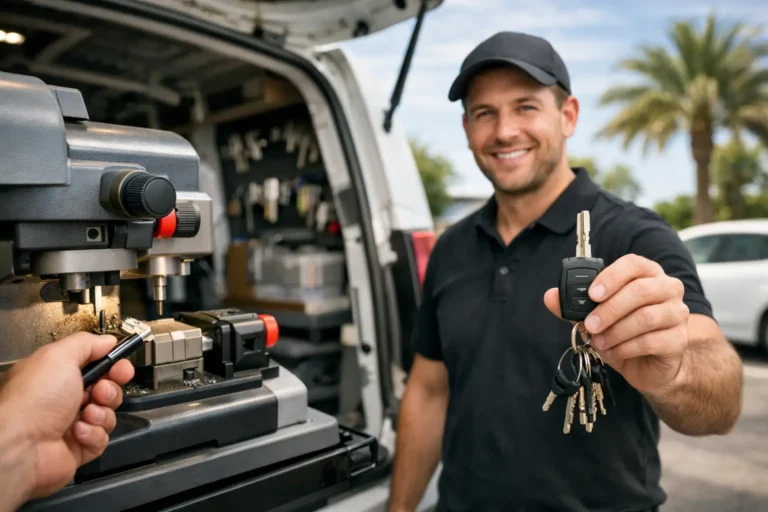
Call a mobile automotive locksmith when you have lost all keys, your key is broken, the car will not recognize the key, or you need a spare made at your location. This is especially helpful when the vehicle cannot be driven to a dealership or shop. A qualified technician can verify the key type, cut a replacement, program it when required, and confirm that it starts the car before leaving.
For drivers in Miami-Dade, Precise Locksmith LLC provides mobile assistance for transponder key replacement, key programming, broken keys, and urgent car key problems. If you are stranded, have your vehicle make, model, year, and location ready when you call. That helps the technician arrive with the proper equipment and key options.
Protect Your Only Working Key
Once you know you have a transponder key, treat it as more than a piece of metal. Avoid dropping it, exposing it to water, or forcing it into a sticky ignition. Keep a spare in a safe place, not inside the vehicle. If your key begins working inconsistently, get it checked before it becomes an emergency.
A transponder key is not always obvious from the outside, but the wrong replacement can leave you stuck when you need to be moving. When there is any doubt, a quick professional identification and test is the practical way to get the right key and keep your car ready to start.