Aftermarket Versus OEM Keys: Which Is Right?
Your only working car key just cracked, stopped responding, or disappeared somewhere between work and home. At that point, aftermarket versus OEM keys is not a technical debate – it is a decision that affects how quickly you can get back on the road, what you pay, and whether the replacement works the first time.
For many drivers, an aftermarket key is a smart, affordable solution. For others, especially owners of newer luxury vehicles or keys with advanced features, an OEM key may be worth the added cost. The right answer depends on the vehicle, the type of key, and the condition you are dealing with.
Aftermarket Versus OEM Keys: The Basic Difference
An OEM key is made by, or for, the vehicle manufacturer. OEM stands for Original Equipment Manufacturer. It is designed to match the original key, remote, or smart fob that came with your vehicle. Depending on the make and model, an OEM replacement may carry the manufacturer’s branding and use the same internal components and remote functions as the original.
An aftermarket key is made by a third-party manufacturer. It is built to be compatible with a specific vehicle’s lock, transponder system, remote functions, or push-button start system. It may look very similar to the original, but it does not come directly from the automaker.
The important word is compatible. A quality aftermarket key can be cut and programmed to work properly with many vehicles. But quality varies more from one aftermarket supplier to another, which is why the source of the key and the technician programming it both matter.
When an Aftermarket Key Makes Sense
For common car keys, transponder keys, remote head keys, and many key fobs, a well-made aftermarket replacement often gives drivers the best value. It can provide the functions you need without the dealer-level price.
This is especially true if you need a spare. A second programmed key can save you from a much more expensive emergency later. It also makes sense for older vehicles where the original key is worn, the buttons have failed, or the plastic shell has broken but the vehicle itself does not require a highly specialized smart key.
An aftermarket option may be a good fit when:
- You drive a common domestic, Asian, or older-model vehicle.
- You need a basic chip key or standard remote replacement.
- You want a functional spare key at a more affordable price.
- Your original key has minor physical damage, but the vehicle’s key system is otherwise straightforward.
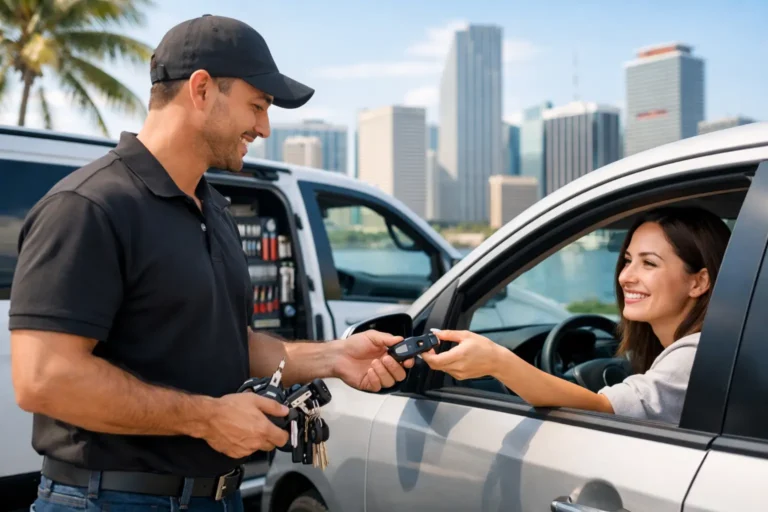
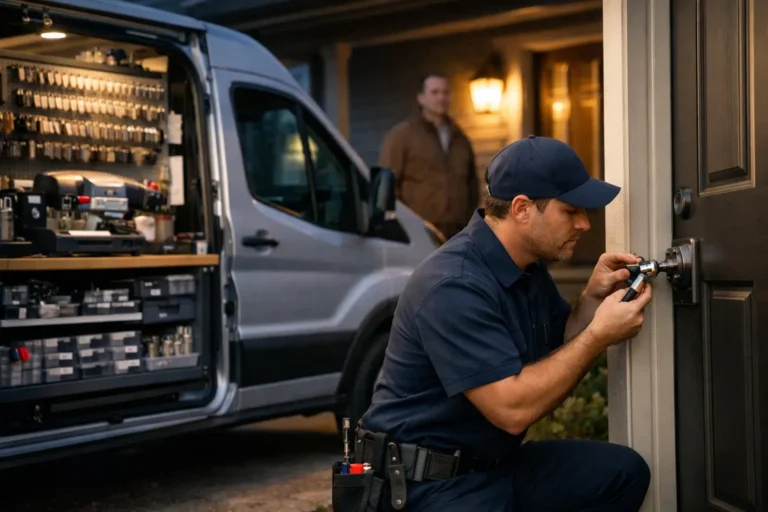
A mobile automotive locksmith can identify the correct key type, cut the blade if needed, and program the transponder or remote on-site. That means you do not have to tow the vehicle or wait around at a dealership just to get a working key.
The Real Benefit Is Not Just the Lower Price
Price is a major reason people choose aftermarket keys, but it is not the only reason. Availability matters when you are locked out, stranded after losing a key, or unable to start your car before work.
A qualified mobile locksmith may have compatible key blanks, remotes, and fobs ready for many vehicles. In an urgent situation, getting the right key programmed at your location can be more valuable than waiting days for a dealer order. The goal is a key that starts the vehicle, operates the features you need, and gives you confidence before the technician leaves.
Why Some Drivers Choose OEM Keys
OEM keys are often the preferred choice for certain newer vehicles, luxury brands, and smart-key systems with more complex electronics. They are also worth considering when you want the closest possible match to the original key in appearance, feel, button layout, and long-term use.
Some vehicles are simply less forgiving about replacement key quality. A late-model proximity fob may control remote start, power liftgate access, memory settings, panic functions, and passive entry. If an aftermarket version does not fully support every feature, the lower upfront cost may not feel like a bargain.
OEM can also be the safer choice if you have had repeated problems with cheap replacement remotes, intermittent button response, weak key shells, or poor battery contact. Not every aftermarket key has those issues, but the risk is higher with unknown brands and bargain parts.
OEM Does Not Automatically Mean You Must Go to the Dealer
Many drivers assume OEM means dealership only. That is not always the case. An experienced automotive locksmith may be able to source and program OEM-quality or genuine OEM keys for supported vehicles. What matters is whether the vehicle requires dealer-only access, special credentials, a specific initialization process, or a key that is currently available.
The best approach is straightforward: provide the year, make, model, and vehicle identification number when requesting a quote. If you still have a working key, say so. Those details help determine whether an OEM or aftermarket option is available and what programming procedure is required.
Fit, Programming, and Features Matter More Than Appearance
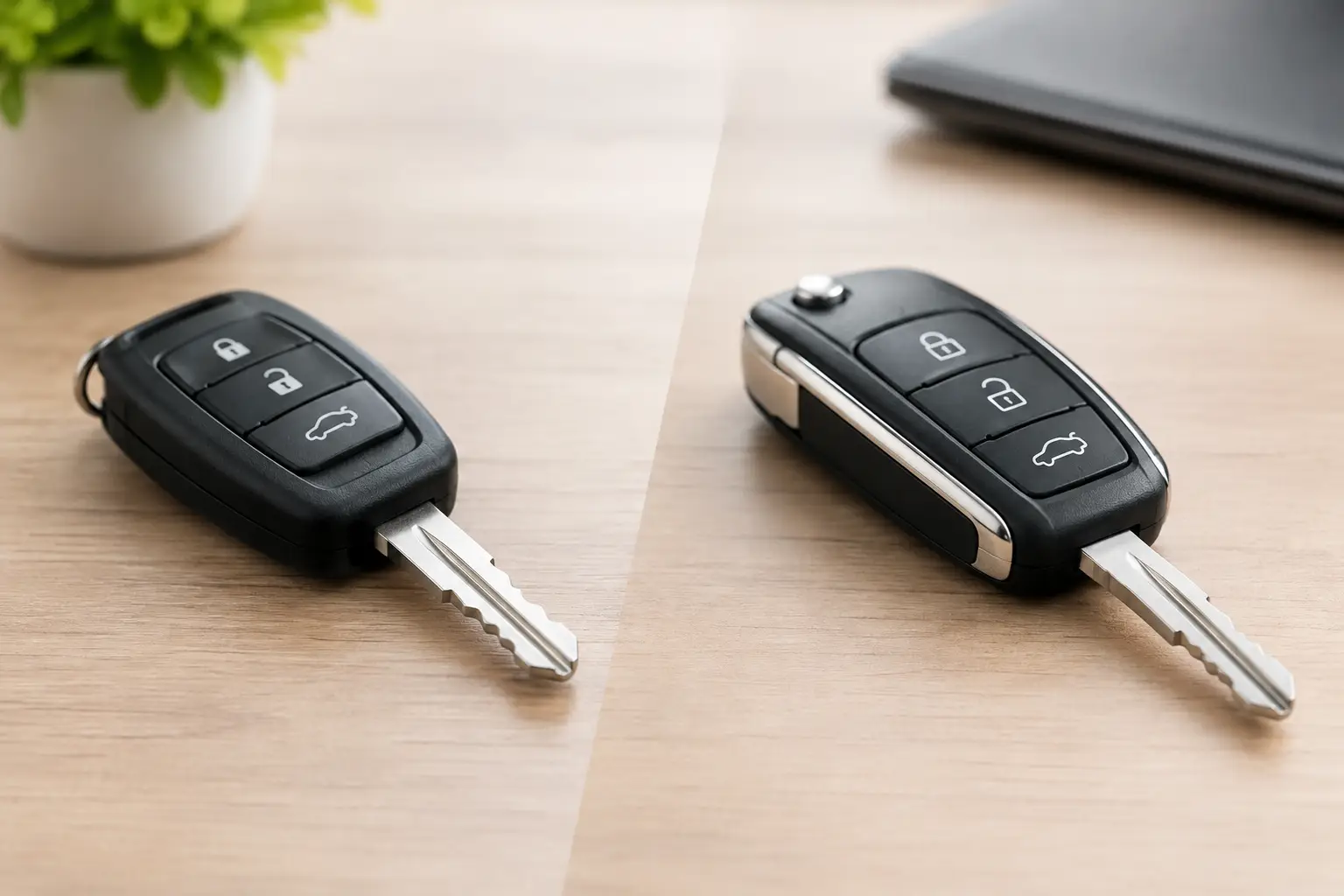
Two keys can look nearly identical and still be completely different inside. The metal blade may fit the door lock, but the car will not start unless the transponder chip is recognized. A remote may unlock the doors but fail to start the engine. A smart fob may start the vehicle but have limited range or an unreliable trunk-release button.
That is why buying a key online based only on a photo can create problems. The FCC ID, part number, frequency, chip type, button configuration, and vehicle compatibility all need to match. Even then, the key has to be cut and programmed correctly.
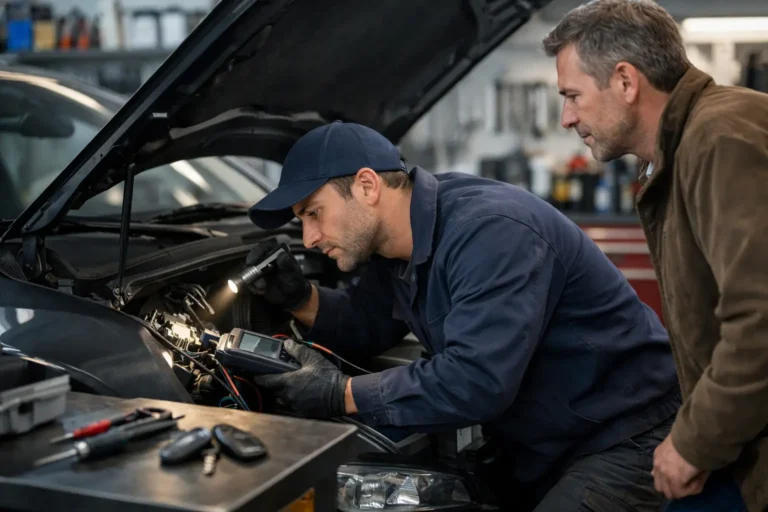
For push-button start vehicles, programming may involve more than pairing a remote. The car’s immobilizer system must accept the new key. On some models, all existing keys may need to be present during programming. On others, lost-key situations require the technician to erase missing keys from the vehicle memory to protect against unauthorized use.
A professional does not just hand you a fob and hope for the best. They test starting, locking, unlocking, panic operation, trunk access, and proximity functions when applicable. They should also check that the key blade operates the mechanical door lock if your vehicle has one.
Be Careful With the Cheapest Online Key
A low-cost online key can work out, but it can also cost more once you add cutting, programming, shipping delays, and the possibility that it is the wrong part. Some keys are poorly assembled. Others are advertised for a wide range of years even though the chip or frequency is not compatible with every trim level.
There is another issue: many locksmiths cannot guarantee customer-supplied keys. If a key fails during programming or arrives defective, you may still need to purchase another one. When the locksmith supplies the key, the parts and work are usually easier to stand behind.
If you already bought a key, keep the packaging and provide every number printed on the back. A locksmith can often tell you before dispatch whether it is likely to be usable. That quick check may prevent a wasted service call.
How to Choose the Right Replacement
Start with the vehicle’s needs, not the label on the key. If you have a standard transponder key for a reliable daily driver, a quality aftermarket key is often practical and cost-effective. If you own a newer vehicle with advanced proximity features, or you want an exact replacement for a premium model, OEM may be the better investment.
Also consider why you are replacing the key. A broken shell may only need a new case and blade transfer. A dead fob may need a battery, not full replacement. A key that turns but will not start the vehicle could have a transponder issue, ignition problem, or immobilizer fault. Replacing the key without diagnosing the problem can waste money.
For drivers in Miami-Dade who need help at their vehicle, Precise Locksmith LLC can assess the key type, explain the available options, and complete compatible cutting and programming on-site. You should receive a clear quote before work begins and know whether the replacement is aftermarket, OEM, or OEM-quality.
The best key is the one that works reliably with your vehicle, fits your budget, and is programmed correctly before you are left stranded again. Keep a tested spare in a safe place, not inside the car, and replace a failing key before it becomes an emergency.