Ignition Repair When Your Key Won’t Turn
Your car key turns halfway, sticks in the ignition, or refuses to move at all. You may be parked outside work, at home, or stranded with groceries and no way to start the car. This is when professional ignition repair matters. Forcing the key can turn a manageable problem into a broken key, damaged ignition cylinder, or a vehicle that needs more extensive service.
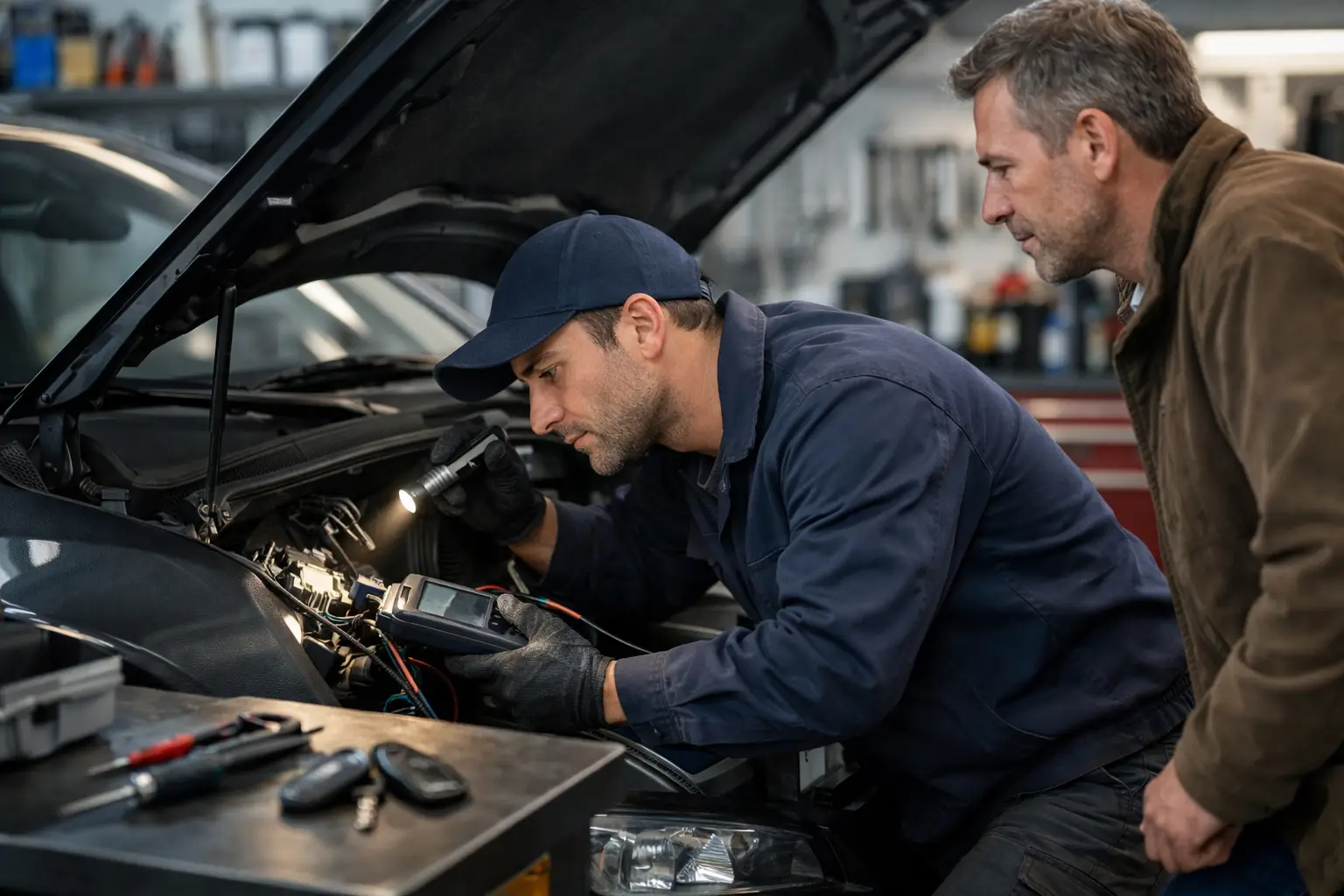
A trained mobile automotive locksmith can come to your location, inspect the key and ignition, and identify what is actually preventing your vehicle from starting. Sometimes the fix is as simple as correcting a worn key. Other times, the ignition cylinder, steering lock, or electronic anti-theft system needs attention. The right repair depends on the vehicle and the symptoms.
What an Ignition Problem Usually Looks Like
Ignition trouble does not always mean the ignition itself has failed. The symptoms can overlap with key wear, a dead battery, a steering wheel lock, or an electronic issue. Paying attention to what happens when you insert and turn the key helps a locksmith diagnose the problem faster.
A common warning sign is a key that goes into the ignition but will not rotate to the accessory or start position. You may also notice that it only turns after repeated attempts, requires you to wiggle it, or works with one key but not another. If the key turns but the dashboard stays dark or the engine does not crank, the issue may be beyond the ignition cylinder and should be checked carefully.
Keys that get stuck in the ignition are another urgent situation. Do not pull hard or use pliers. Modern keys can bend, snap, or damage the internal pins in the cylinder. A locksmith can safely remove the key and determine whether the cylinder can be repaired, rekeyed, or needs replacement.
The Steering Wheel Lock Can Mimic a Failed Ignition
If the steering wheel was turned after the car was shut off, it can lock in place and put pressure on the ignition. The key may feel completely frozen even though the ignition is not damaged. Hold the brake, gently move the steering wheel left and right, and turn the key with light pressure. Do not force either one.
If the wheel will not release or the key still will not turn, stop trying. Repeated force can wear down the key or break internal ignition components. An on-site locksmith can assess whether the problem is a simple steering lock bind or a real ignition failure.
Why Ignitions Fail
Most mechanical ignition cylinders wear out gradually. Every time the key enters and turns, it contacts small internal pins and springs. After years of use, those parts can become worn, dirty, bent, or misaligned. A heavily used vehicle key can also wear down enough that it no longer lifts the pins to the correct position.
Heat, moisture, and debris can make the problem worse in South Florida. Sand, dirt, old key fragments, and residue inside the keyway can interfere with the cylinder. A key ring packed with heavy accessories can also put extra strain on the ignition while driving.
Electronic keys create another layer of diagnosis. A transponder chip or smart key may be physically able to turn the ignition, but the vehicle may not recognize it. In that case, the engine may crank and then fail to start, or a security light may appear. The key may need programming or repair rather than mechanical ignition work.
There are several possible causes, including a worn key blade, damaged ignition wafers, a broken ignition housing, a faulty steering lock, a transponder issue, or an electrical problem. That is why guessing and buying parts before a diagnosis can waste time and money.
When You Need Professional Ignition Repair
Call for help if your key will not turn after a gentle steering wheel release attempt, if it is difficult to remove, or if you see metal damage on the blade. You should also call if the key broke in the ignition, the cylinder spins freely without starting the car, or the vehicle rejects a key that previously worked.
Professional ignition repair is especially valuable when you only have one working key. Continuing to use a key that sticks can leave you stranded at the worst possible time. A locksmith can often create a properly cut replacement key, repair the immediate issue, and help you avoid a repeat emergency.
For drivers in Miami-Dade, a mobile service saves the added expense and delay of towing a vehicle to a shop. Precise Locksmith LLC can dispatch a mobile automotive locksmith to inspect many ignition and key problems where the vehicle is parked. This is useful for cars stuck in a driveway, parking garage, office lot, or roadside location.
Repair, Rekey, or Replace: What Is the Difference?
The best solution is not always full replacement. If the ignition cylinder is dirty or has minor internal wear, repair may restore smooth operation. If the cylinder is damaged but the housing and related parts are still sound, a locksmith may be able to rebuild or replace the cylinder and match it to your existing key.
Rekeying changes the internal configuration so the ignition works with a different key pattern. This can be helpful if your keys were lost, stolen, or compromised. It may also be an option when matching the ignition to the vehicle’s door locks makes more sense than carrying separate keys.
Replacement is usually needed when the cylinder is severely damaged, the key broke inside and caused internal damage, or the ignition turns without engaging properly. Some vehicles require additional programming after ignition work, particularly models with transponder keys, push-button systems, or anti-theft features.
The trade-off comes down to condition, vehicle design, available parts, and security needs. A dependable locksmith should explain what failed, what can be repaired, and what the expected cost covers before moving forward.
What Not to Do When the Key Is Stuck
A stuck key creates pressure to try anything that might get the car moving. Avoid spraying random household lubricants into the ignition. Some products collect dirt, leave residue, or make internal components harder to repair. Do not hammer the key, twist it with tools, or attempt to drill the cylinder.
Also avoid repeatedly inserting a badly worn key. If one key works better than another, use the better key only long enough to get professional help. The worn key is a warning that the ignition may soon stop accepting either one.
If your car has a remote or smart key and the battery is weak, replace the key battery only if you can do so without damaging the fob. A dead fob battery can affect remote functions, but the mechanical key and immobilizer system may be separate issues. A locksmith can test the key and program a replacement when needed.
A Mobile Locksmith Can Solve More Than the Cylinder
An ignition issue often comes with another problem: a lost key, a damaged fob, a locked car door, or no spare key at all. A qualified automotive locksmith can address the full situation on-site. That may include extracting a broken key, cutting a new key, programming a transponder or remote, repairing the ignition, and checking that the door locks and ignition work together.
This approach matters because a quick fix is not useful if your new key will not start the vehicle or your repaired ignition no longer matches the key you have. The goal is to leave you with a reliable way to lock, unlock, and start your car.
When you call, have the vehicle year, make, model, and your exact location ready. Tell the dispatcher whether the key will not turn, is stuck, broke off, or turns but does not start the car. Clear details help the technician arrive prepared with the right tools and key programming equipment.
A key that starts sticking rarely improves on its own. If your ignition is giving you trouble, get it checked before the next commute, school pickup, or late-night drive turns into a roadside emergency. Fast, careful help can protect your key, your ignition, and your time.