Car Theft Prevention and What to Do Next
A car theft can turn an ordinary workday, school pickup, or late-night errand into a stressful emergency. One minute your vehicle is where you parked it. The next, it is gone, along with your wallet, work tools, personal documents, garage remote, or spare keys that may have been inside.
The best response starts before anything happens. A few practical habits make your vehicle less attractive to thieves, while knowing what to do after a theft can protect your finances and help law enforcement act quickly.
Why Car Theft Still Happens So Fast
Many thefts are crimes of opportunity. An unlocked door, visible bags on a seat, a key fob left too close to the vehicle, or a car running unattended can be enough. In busy parking lots, apartment complexes, driveways, and public garages, thieves look for the easiest target and move quickly.
Modern vehicles have added security features, but they have also created new risks. Keyless entry systems can be targeted through relay attacks, where criminals attempt to extend the signal from a key fob inside a home. Some thieves also break a window simply to grab valuables, then use a garage opener, registration paperwork, or spare key to gain more access later.
Not every theft is preventable, and victims should never blame themselves. Still, reducing easy opportunities can make a real difference.
Car Theft Prevention That Works in Real Life
Start with the basics every time you exit your vehicle. Turn it off, take the keys or fob, close the windows, and lock every door. This sounds obvious, but rushed mornings and short stops are when people are most likely to leave a vehicle vulnerable.
Do not leave valuables in plain sight. A backpack, purse, laptop case, shopping bag, or even loose charging cables can signal that something worth taking may be inside. Put belongings in the trunk before you arrive at your destination when possible. Moving valuables into the trunk after parking can tell someone watching exactly where they are.
Be careful with vehicle documents. Your registration should be accessible if needed, but leaving it in the glove box can reveal your home address if the car is stolen. If your insurance card includes personal information, consider keeping a secure digital version on your phone if your insurer allows it.
Where you park matters too. Choose well-lit areas with steady foot traffic, visible cameras, or attended parking when available. At home, use a garage whenever possible. If you park in a driveway, keep the area illuminated and avoid leaving key fobs near the front door, windows, or exterior walls.
For keyless vehicles, a signal-blocking pouch or box can reduce the risk of relay theft. It is a small precaution, but it can be worthwhile for drivers who park close to the street or own a vehicle that uses proximity-based entry and starting.
Extra security devices can help, but there are trade-offs. A steering wheel lock is visible and may encourage a thief to move on, though it is not impossible to defeat. An alarm can draw attention, but alarms are sometimes ignored in noisy areas. A GPS tracker can assist after a theft, but it does not physically stop someone from driving away. The strongest approach is layering simple protections rather than relying on one device.
Never Leave a Running Car Unattended
Remote starts and quick errands create a common opening for theft. Leaving a vehicle idling outside a store, home, school, or coffee shop may feel convenient, especially in South Florida heat. It also gives a thief an easy opportunity.
Stay with the vehicle while it is running unless the system keeps it locked and prevents driving without the key. If you need to step away, shut it off and take the key fob with you. The few seconds you save are not worth losing the entire car.
What to Do Immediately After Car Theft
If you return to where you parked and your vehicle is missing, first confirm that it was not towed or moved. Check nearby signage, ask property management or security, and verify whether another authorized driver took the car. If there is any indication it was stolen, call law enforcement right away.
Give the responding officer as much detail as possible: the make, model, year, color, license plate, vehicle identification number, identifying damage, decals, aftermarket wheels, and any tracking information. Have recent photos available if you can. Ask for the police report or case number before you leave.
Then contact your insurance company promptly. Comprehensive coverage may cover a stolen vehicle, but coverage, deductibles, rental reimbursement, and timelines vary by policy. Do not wait until you have every detail. Opening the claim early gives the insurer a chance to explain what they need.
If your wallet, keys, identification, phone, garage remote, work equipment, or financial information was inside the car, treat those items as separate security issues. Cancel cards, monitor accounts, change relevant passwords, and contact your bank if necessary. A garage remote can create a risk at home, especially if registration paperwork reveals your address. In that situation, consider reprogramming the garage opener and improving home access security.
If you use a vehicle tracking app, share the location information with law enforcement. Do not try to recover the vehicle yourself or confront anyone. A stolen car may be occupied, damaged, or connected to other criminal activity. Let police handle recovery.
After Your Vehicle Is Recovered
A recovered vehicle should not automatically be treated as safe to drive. Before using it, inspect it carefully and document visible damage with photos. Look for broken windows, damaged locks, steering column damage, ignition problems, missing key components, wiring issues, and signs that someone tried to program another key.
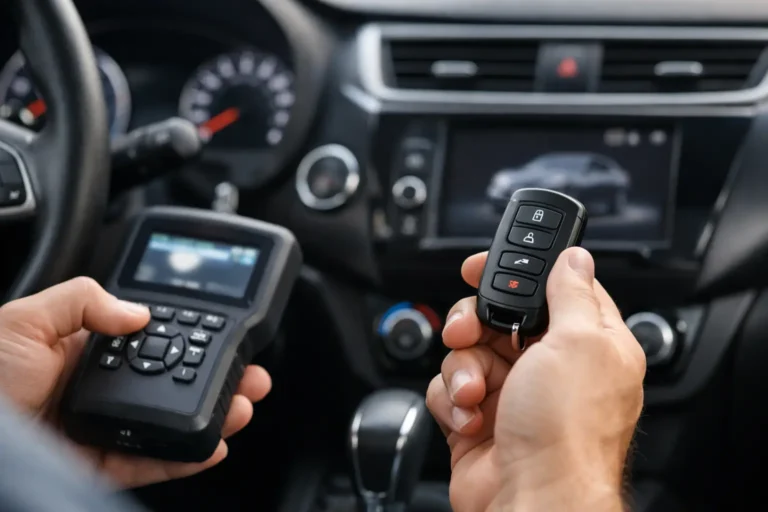
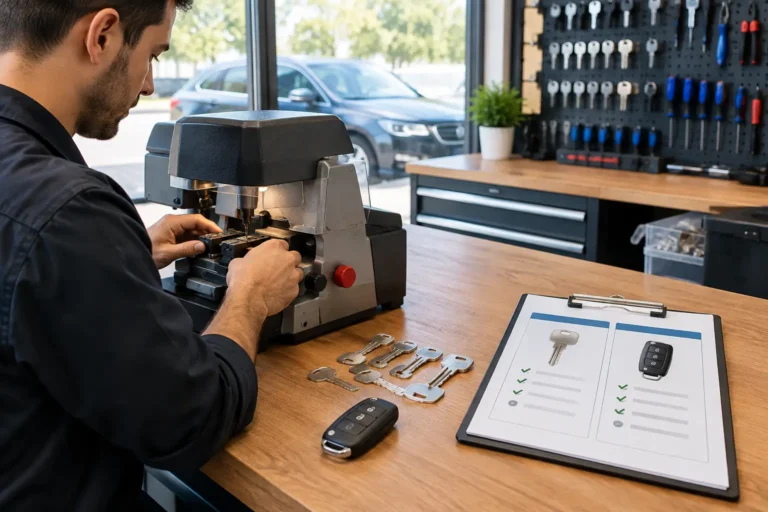
If a key was stolen or the vehicle was accessed without authorization, replacing or reprogramming keys may be necessary. A thief who has a working key or cloned fob could return later, even after the vehicle is recovered. Depending on the vehicle, deleting old programmed keys and adding new ones may be the right move.
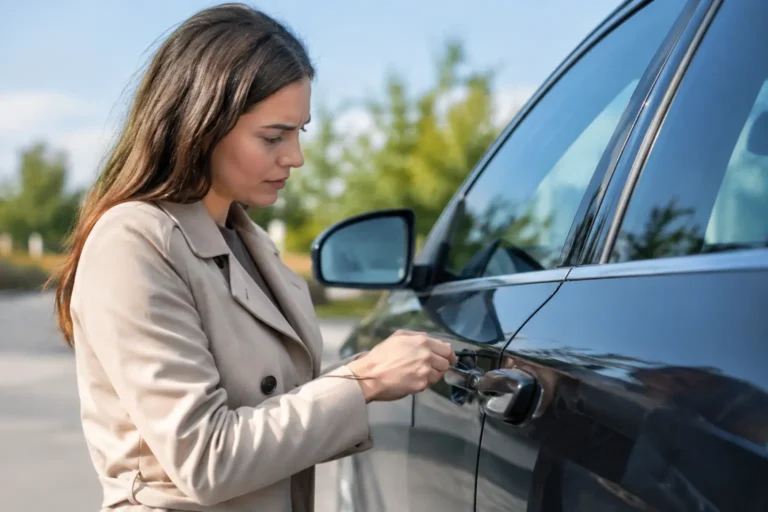
This is also the time to address damaged locks and ignitions. A forced door lock may fail later or leave the vehicle easier to enter. An ignition that feels loose, sticks, or does not turn smoothly should be inspected before it leaves you stranded. Mobile automotive locksmith service can be useful when the car cannot be driven safely to a shop or the key system needs attention at the vehicle.
A Missing Key Is Not Always a Theft, But Act Quickly
Losing a key fob does not mean someone plans to steal your vehicle. Often, the key is simply misplaced. But if it was lost in a public place, dropped near your home, or taken with documents showing your address, do not assume it is harmless.
A replacement key alone may restore access, but it may not remove the missing key from the vehicle’s memory. Ask whether your vehicle supports deleting old keys during programming. That step can prevent the lost fob from being used later.
For drivers in Miami-Dade, a mobile locksmith can often cut, program, or replace a key on-site and help address damaged locks or ignition trouble without requiring a tow. Precise Locksmith LLC provides this type of urgent automotive support when a key or lock problem leaves you exposed or unable to drive.
Make Your Next Parking Stop Safer
The goal is not to live worried about your vehicle. It is to build a short routine that becomes automatic: lock the car, take the keys, hide valuables before parking, choose visible spaces, and never leave the engine running unattended. If something feels off after a theft, break-in, lost key, or damaged ignition, act early. A quick security check now can prevent a second problem later.