How to Free Jammed Doors Without Causing Damage
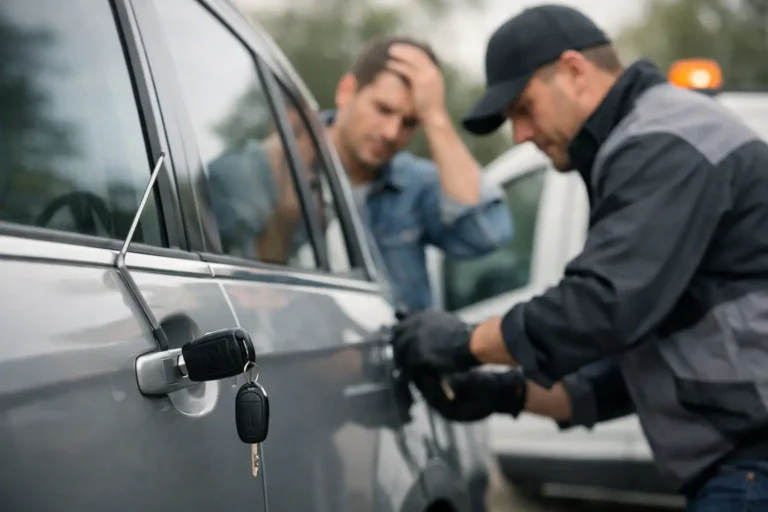
A jammed door can turn a normal day into a stressful problem fast. Whether it is your car door in a parking lot or the front door of your home, knowing how to free jammed doors starts with one rule: do not force it. Pulling harder, kicking the door, or repeatedly twisting a key can turn a simple alignment issue into a broken handle, damaged latch, bent key, or expensive lock repair.
The right next step depends on what is actually jammed. A door may be stuck because of pressure on the latch, a worn hinge, swelling from moisture, a frozen or damaged lock, a failed vehicle actuator, or something caught in the frame. Take a moment to identify the symptom before trying anything.
First, Find Out What Is Holding the Door
Start by checking whether the door will move at all. If the handle moves normally but the door will not open, the latch may be caught under pressure or the internal latch mechanism may have failed. If the handle feels loose, disconnected, or unusually stiff, stop pulling on it. That usually points to a mechanical problem that needs repair.
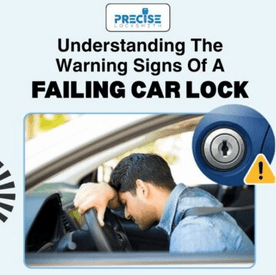
If a key will not turn, avoid forcing it. A key that is already bent, worn, cracked, or difficult to remove can break inside the lock. For a car, do not keep cycling the key fob or yanking the exterior handle if the lock seems unresponsive. The issue could be a dead battery, a failed door-lock actuator, a damaged linkage, or a frozen latch.
Also look around the door edges. A floor mat, seat belt, cargo item, warped weatherstripping, or damaged trim can interfere with a vehicle door. On a house or business door, check for an object behind the door, a swollen wood edge, visible hinge sag, or a door that is pressing tightly against the strike plate.
How to Free Jammed Doors With Light Pressure
Many doors jam because the latch is carrying too much pressure against the frame. This is common when a vehicle is parked on an incline, a door has sagged over time, or a wood door has expanded in humid South Florida weather.
Try applying gentle pressure in the direction that relieves the latch while operating the handle. For example, press the door inward toward the frame while lifting or turning the handle, then try pulling it open. If that does not work, gently pull the door outward while working the handle. Use steady pressure, not sudden force.
With a vehicle door, you can carefully push near the latch side of the closed door while using the handle. Do not lean your full body weight against the glass or pull on the handle hard enough to flex it. If the door starts to move but will not release, stop and reassess. Continued force can damage the latch, handle cable, or door panel.
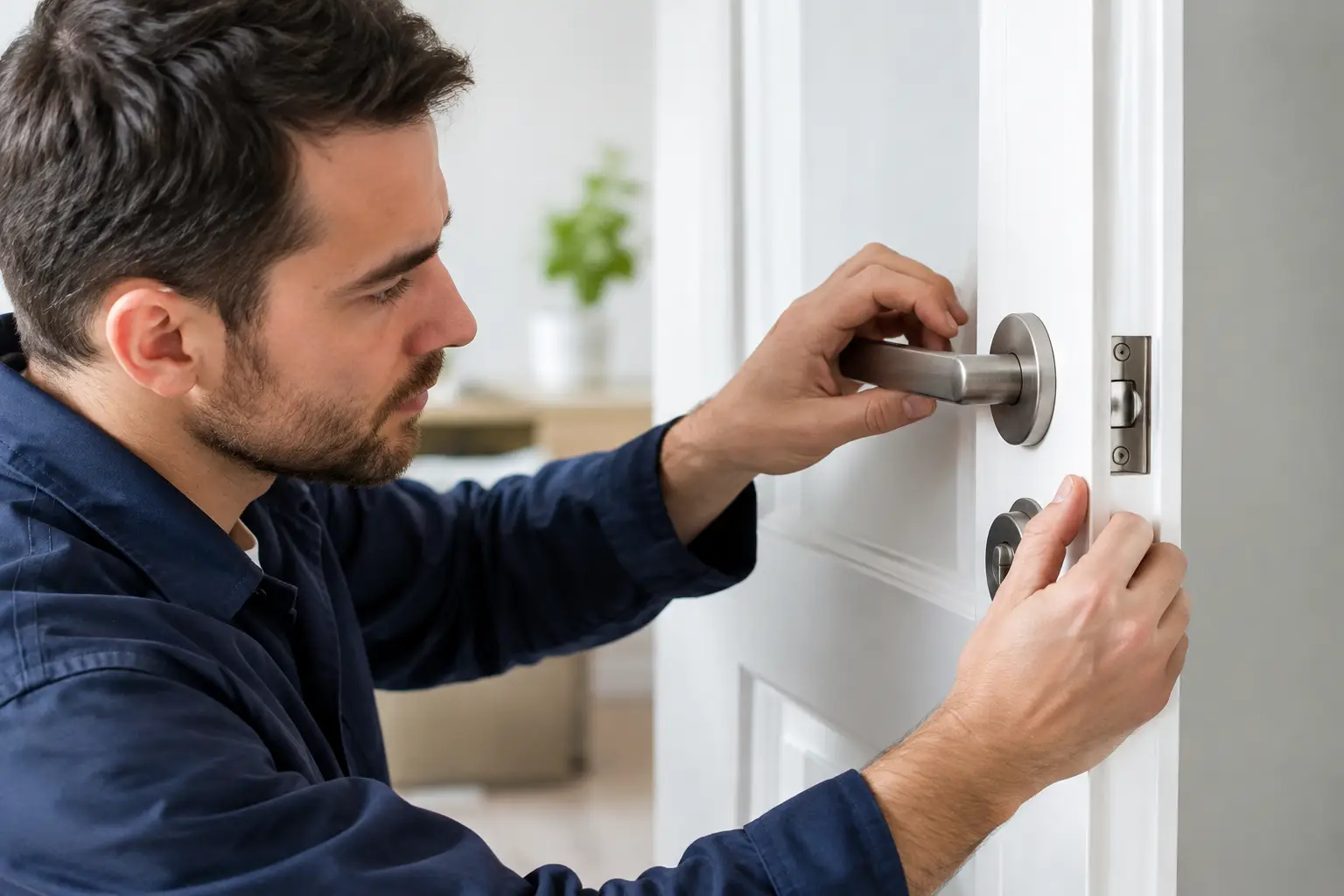
For a sticking residential door, lifting the door slightly from the handle side while turning the knob may take enough weight off the latch for it to release. This is only appropriate when the door and handle feel solid. If the knob, lever, deadbolt, or key is binding, do not keep testing it aggressively.
Check for Weather, Dirt, and Moisture Problems
Heat, rain, moisture, and debris can all make doors difficult to open. A wood door may swell against the frame after heavy rain. Rubber seals on a car door can stick after long periods of heat or moisture. Dirt inside a lock cylinder can also make a key difficult to insert or turn.
If the door is sticking around the frame rather than at the lock, inspect the weatherstripping and visible edges for anything caught between them. Remove only loose debris you can clearly see and reach safely. Do not insert metal tools between the door and frame. That can tear weather seals, scratch paint, bend trim, or damage the locking hardware.
For a key that feels dry or rough in a lock, use a lubricant made specifically for locks if you have one available. Avoid soaking the cylinder with oil, household spray, or heavy grease. These products may feel helpful at first but can collect dirt and create a worse jam later.
A frozen lock needs a different approach. Use a lock de-icer or gentle warmth if it is safe to do so. Never use an open flame, boiling water, or excessive heat on a vehicle door, lock, or painted surface. Rapid temperature changes can damage parts and leave you with a larger repair.
When a Car Door Will Not Open From Inside or Outside
A car door that opens from one side but not the other often has a broken handle linkage, cable, or actuator problem. A door that will not open from either side may have a failed latch, a child safety lock issue on a rear door, collision damage, or an electrical failure.
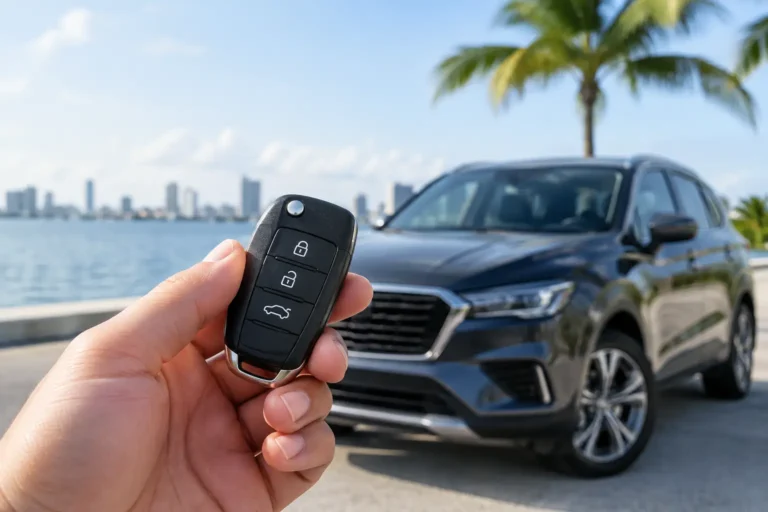
If your vehicle has electronic locks, check whether the battery is weak or dead. A low vehicle battery can prevent power locks from responding even when the key fob appears to work intermittently. In some cases, the mechanical key inside the fob can provide access through the driver-side lock, but do not force it if it will not turn smoothly.
Never pry a vehicle door open with a screwdriver, coat hanger, wedge, or improvised tool. Modern vehicles have side airbags, wiring, sensors, reinforced frames, and sensitive weather seals inside the door. A quick attempt to save money can damage the window, airbag system, paint, lock cylinder, or interior panel.
A mobile automotive locksmith can diagnose whether the issue is the key, lock cylinder, latch, handle, actuator, or ignition-related access problem. They can also help when keys are locked inside, a key has broken in the lock, or the vehicle will not respond to a remote.
Do Not Force a Key That Is Stuck or Turning Poorly
A jammed door and a stuck key often happen together. If the key will not come out, do not twist it back and forth repeatedly or pull it with pliers. Pliers can snap the key blade and leave part of it inside the cylinder.
Check that the key is in the correct position for removal. On some car ignitions and door locks, slight pressure on the door or steering wheel can affect how the key moves. If the key still will not turn or release with light pressure, professional help is the safer choice.
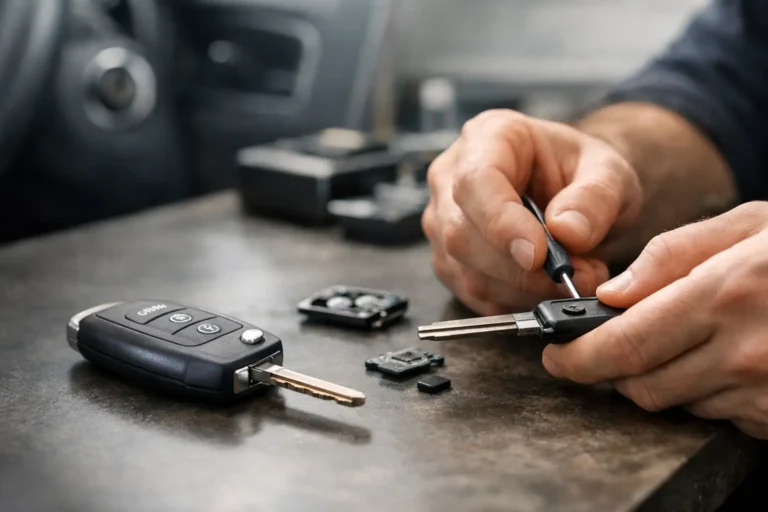
This matters even more with modern transponder keys, smart keys, and fobs. A damaged key can create a second problem: even after you get into the vehicle, the car may not recognize the key or start properly. Repairing or replacing it early is usually less stressful than being stranded later.
Signs It Is Time to Call a Locksmith
A simple sticking door can sometimes be resolved with careful pressure and a visual check. Stop your attempt and call for help when you notice any of the following:
- The key is bent, cracked, stuck, or partly broken in the lock.
- The handle is loose, broken, or moves without opening the latch.
- The door is locked and you cannot access the interior safely.
- The lock cylinder spins, feels damaged, or will not accept the key.
- The vehicle door has electrical lock problems, accident damage, or a failed actuator.
- A child, pet, vulnerable passenger, or urgent medication is locked inside a vehicle.
For an immediate safety emergency involving a child, pet, or person in distress inside a vehicle, call 911 first. Do not delay while trying different tools or waiting for a non-emergency solution.
Get On-Site Help Before a Small Problem Gets Bigger
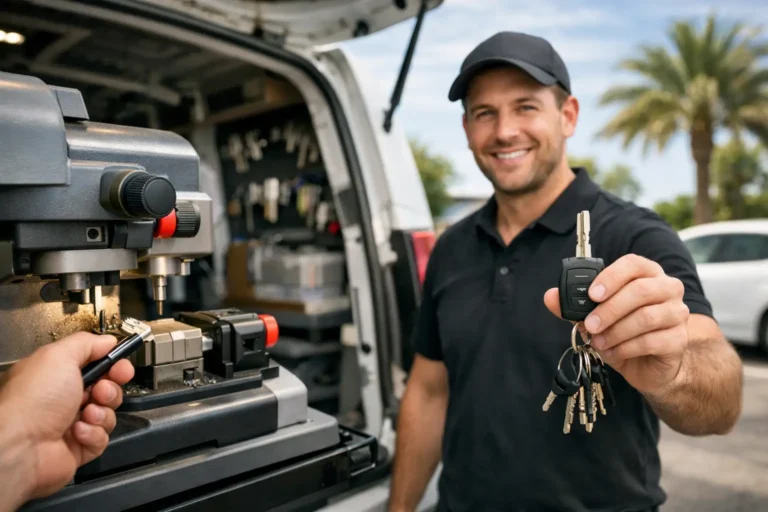
A jammed door rarely improves by being forced. The goal is to protect the lock, door, frame, key, and vehicle while getting access restored quickly. If light pressure and a basic visual check do not solve the problem, a trained mobile locksmith can handle the issue at your location without sending you across town to a shop.
Precise Locksmith LLC provides mobile help for vehicle lockouts, stuck keys, damaged car locks, key programming, ignition issues, and jammed car door problems across Miami-Dade areas including Hialeah, Doral, Miami Lakes, and Miami Gardens. When you are stranded or your door will not cooperate, call for a clear quote and professional help before extra force creates extra damage.