Why Does My Key Fob Drain Battery So Fast?
A key fob that works one day and barely responds the next can turn a normal commute into a problem fast. If you are asking, “why does my key fob drain battery so fast?” the answer is usually more than just an old battery. The fob may be sending signals when it should be resting, its buttons may be getting pressed in a pocket or bag, or an internal component may be failing.
The good news is that many key fob battery problems are simple to identify. The key is to act before the fob stops working completely, especially if your vehicle relies on push-button start or a proximity key to unlock the doors.
Why Does My Key Fob Drain Battery So Fast?
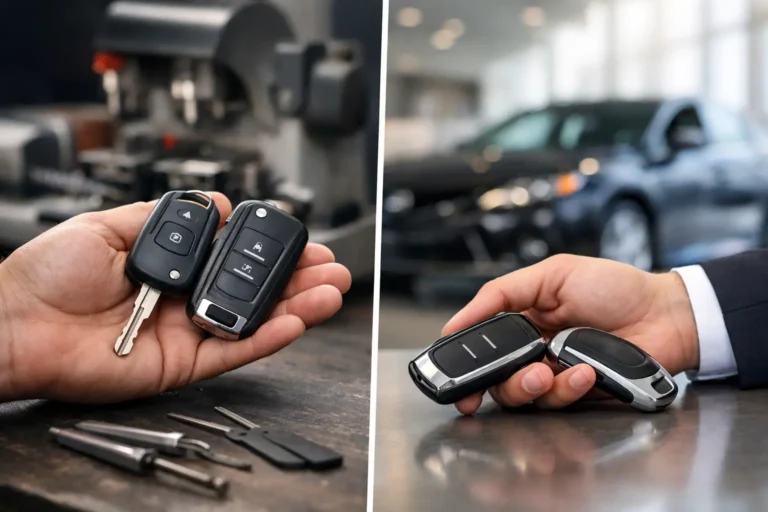
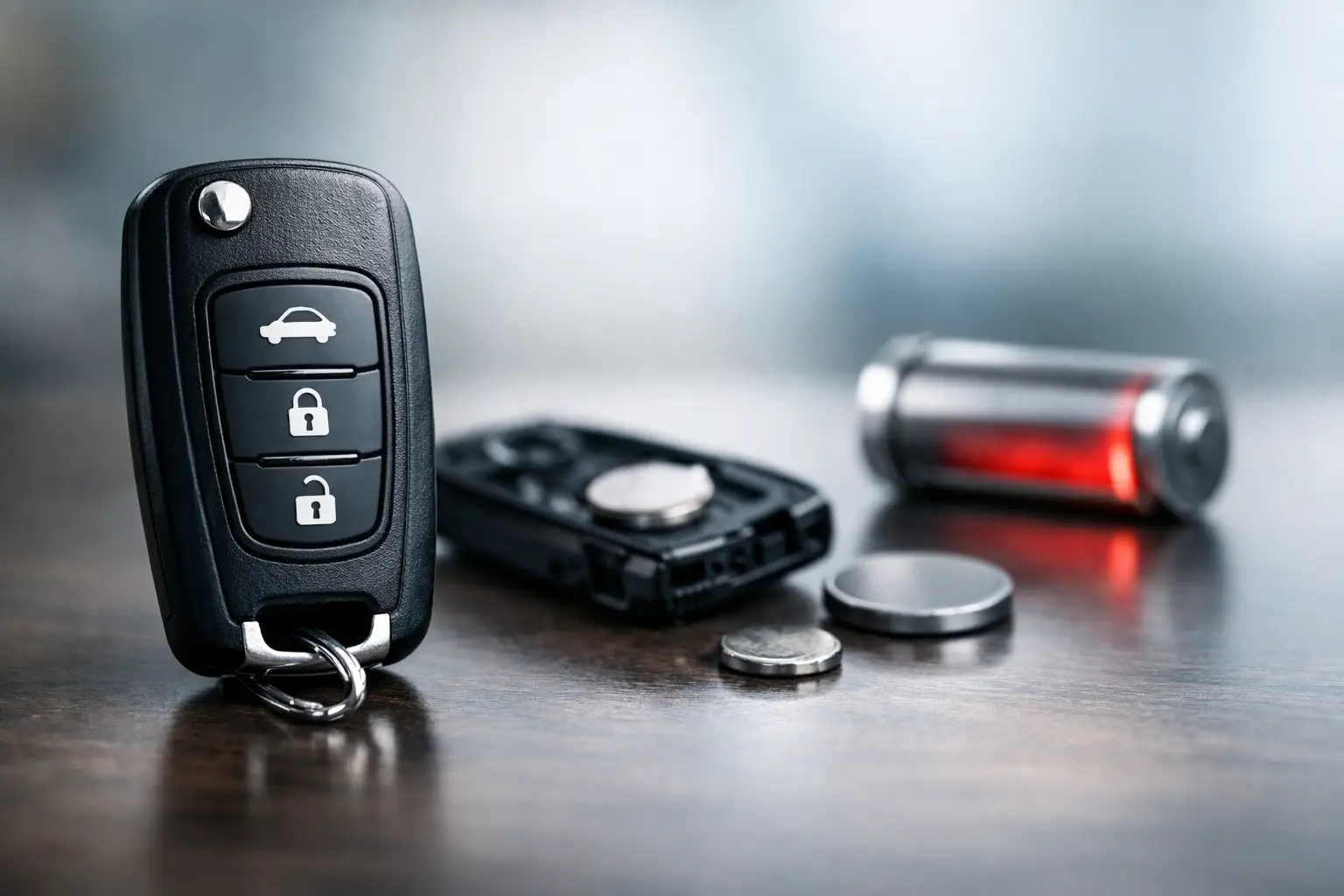
Most key fobs use a small coin-cell battery, commonly a CR2032, CR2025, or CR2450. Under normal conditions, that battery often lasts two to four years. Some fobs last longer; others use more power because of their design, vehicle features, and how they are carried.
When a new battery dies in weeks or a few months, something is likely keeping the fob active or wasting power inside it. A weak signal range, intermittent operation, or a warning message on the dashboard can all point to the same issue.
A button is being pressed without you noticing
This is one of the most common causes. A fob packed tightly in a purse, work bag, pocket, or center console can have a button held down by other items. Even a partially pressed panic, trunk, lock, or remote-start button can make the fob transmit repeatedly.
Check the fob after taking it out of the place where you usually carry it. Do any buttons feel sticky, soft, loose, or harder to release than the others? A worn rubber button pad or cracked housing can allow a switch to stay engaged. If the panic alarm goes off unexpectedly, the doors keep locking, or the trunk opens on its own, do not ignore it. Those are clear signs the fob needs attention.
The key fob has water or moisture damage
Miami humidity, rain, spilled drinks, wet hands, and a trip through the washing machine can all affect a key fob. It does not have to be completely submerged for moisture to create trouble. Corrosion on the battery contacts or circuit board can cause a short, weak connection, or ongoing power draw.
You may notice that the fob works only from close range, works after being tapped, or stops working at random. Opening a wet or corroded fob without care can damage tiny clips, seals, and electronic parts. If there is visible green, white, or rusty residue near the battery, a professional inspection is often the safer move.
The battery is poor quality or the wrong type
Not every coin battery performs the same way. Old shelf stock, low-quality batteries, and counterfeit batteries can run down much faster than expected. A battery can also lose power if its package was damaged or if it was stored in a hot place for a long time.
Using the wrong battery size can create a second problem. A battery that is too thin may make inconsistent contact. One that is too thick may strain the fob housing or battery terminals. Check the number printed on the old battery and use the exact replacement specified for your fob. If the old battery leaked, replace it carefully and have the contacts checked before installing a fresh one.
The fob is too close to the vehicle all the time
Smart keys and proximity fobs communicate differently than older remote keys. They are designed to be detected when you approach the vehicle, touch the door handle, or press the start button. Keeping the fob very close to the vehicle – on a hook near the garage, in a vehicle-adjacent room, or in the car itself – may cause more frequent communication in some models.
It depends on the vehicle. Many modern systems are designed to limit this drain, but repeated wake-ups can still affect battery life in certain conditions. Store the fob farther from the vehicle overnight and see whether the issue improves. Never leave a working smart key inside an unlocked vehicle, even briefly.
A damaged circuit board is using power continuously
Drops, crushed fobs, past moisture exposure, and worn solder connections can damage the electronic board inside the fob. When this happens, the fob can draw power even when no button is pressed. It may also transmit weakly, making you press the buttons multiple times and assume the battery is the only issue.
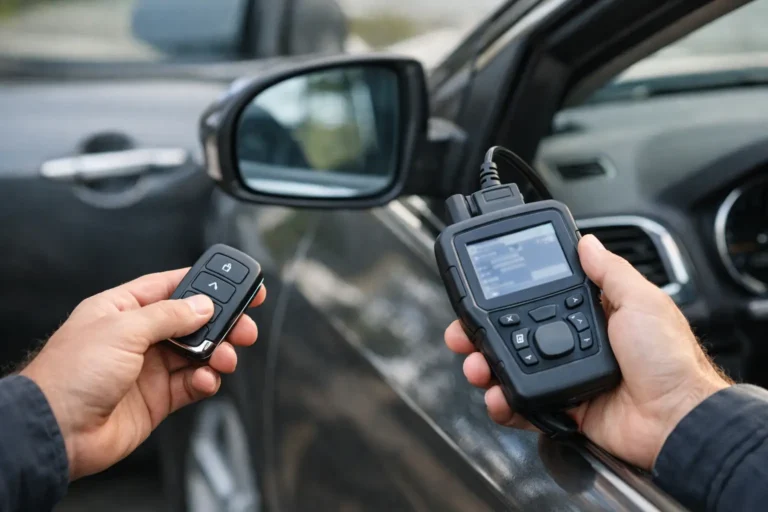
This is where replacing batteries again and again stops being cost-effective. A key fob repair technician can test the battery contacts, buttons, board, and signal function. In some cases, the fob can be repaired. In others, replacement and programming are the more reliable option.
Quick Checks Before You Replace Another Battery
Start with the simple checks. Remove the fob from any tight key cover or holder and press every button individually. Each button should move freely and return to its normal position. Look for cracks around the seam, missing pieces, warped plastic, or signs of liquid exposure.
Next, install the correct new battery from a dependable source. Before closing the fob, make sure the battery is facing the proper direction and sitting firmly under the contact tabs. Avoid touching both sides of the battery excessively, and do not bend the metal tabs. A loose contact can make a good battery appear dead.
Then test the fob from different distances. Try locking and unlocking the vehicle from several feet away, then test the trunk release, panic button, and remote start if your vehicle has those features. If one button works but another does not, the problem may be the button or circuit rather than the battery.
If you have a spare fob, compare them. When one fob drains batteries while the spare works normally, that strongly suggests a problem inside the original fob. If both fobs are unreliable, the issue could involve the vehicle receiver, the programming, or another electrical fault that needs diagnosis.
Do Not Confuse a Dead Fob Battery With a Dead Car Battery
A key fob battery and a vehicle battery are separate issues, but the symptoms can overlap. A weak car battery can cause push-button start warnings, slow cranking, dim interior lights, or a no-start condition. A weak key fob battery more often causes reduced remote range, delayed door unlocking, or a “key not detected” message.
Many vehicles still have a backup way to start when the fob battery is low. Some require you to hold the fob against the start button or place it in a designated backup slot. The exact method varies by make and model, so check your owner’s manual before an emergency happens. Do not force the mechanical key or pry open a door lock if it is stuck.
When Key Fob Repair or Replacement Makes More Sense
A fresh battery is the right first step when the existing battery has simply reached the end of its life. But if a new battery drains quickly, the fob gets hot, buttons stick, the case is broken, or the signal cuts in and out, repair or replacement is the better call.
A mobile automotive locksmith can inspect the fob, replace damaged parts when possible, cut an emergency key if needed, and program a replacement fob at your location. That matters when you are stuck at work, at home, or in a parking lot and cannot get to a dealership. It can also prevent the bigger problem of being locked out with a fob that has failed completely.
For drivers in Miami-Dade, Doral, Hialeah, Miami Lakes, and nearby areas, Precise Locksmith LLC provides on-location key fob repair, replacement, and programming assistance. A licensed and insured technician can help determine whether you need a battery, a repaired fob, or a properly programmed replacement without sending you from shop to shop.
Protect Your Key Fob From Early Battery Drain
Treat the fob like the small electronic device it is. Keep it dry, avoid leaving it in direct heat, and do not let it ride loose with coins, tools, or heavy keychains that can press the buttons. A protective case can help with drops, but choose one that does not squeeze the buttons.
It also helps to replace the battery at the first sign of reduced range instead of waiting for a complete failure. Keep the mechanical emergency key accessible, and know your vehicle’s backup-start procedure before you need it. If your key fob is draining batteries repeatedly, do not keep guessing. Getting it checked now is usually faster and less stressful than dealing with a lockout later.