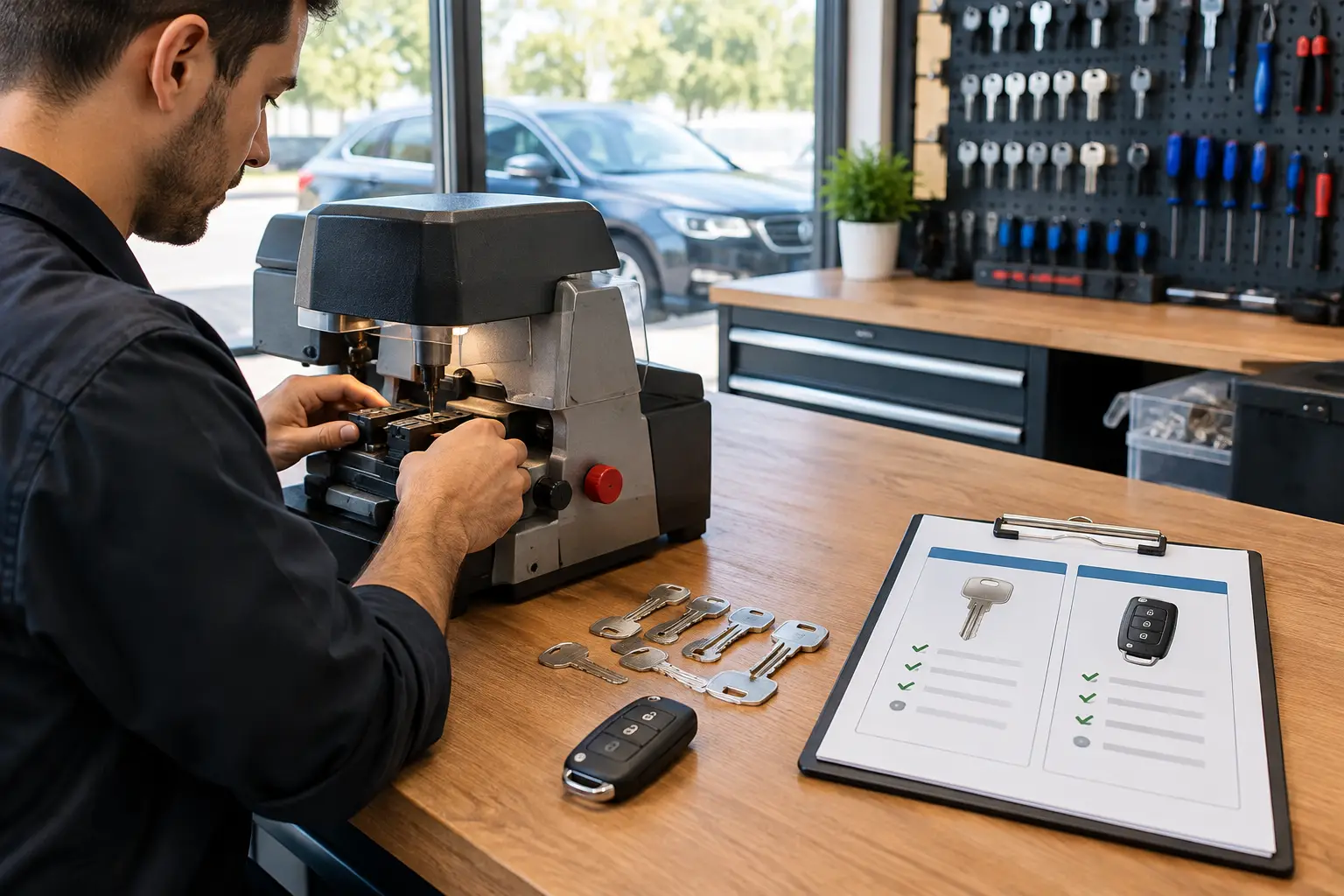
Car Key Cutting Versus Cloning Explained
A spare car key can save you from a stressful lockout in a parking lot, outside work, or at home before an early drive. But not every duplicate is made the same way. Car key cutting versus cloning comes down to two separate jobs: creating a key that physically turns in the lock and ignition, and making sure the vehicle recognizes its security chip.
For some vehicles, the answer is simple. For others, especially newer models with transponder chips, proximity fobs, or push-button start, choosing the wrong method can leave you with a key that turns but will not start the car. Here is what drivers need to know before paying for a duplicate.
What Car Key Cutting Actually Does
Car key cutting shapes the metal blade of a key to match your vehicle’s locks and ignition. A locksmith can cut a key from an existing working key, from the vehicle’s key code, or by decoding the lock when appropriate.
The cuts along the blade are not random. They align with the internal pins or wafers inside the door lock and ignition cylinder. When the pattern is correct, the key can mechanically unlock the door and turn the ignition.
For an older vehicle without an electronic immobilizer, cutting may be all that is required. The new key can unlock the car and start it immediately. Many vehicles built from the late 1990s onward, however, use an anti-theft system. On those cars, a correctly cut key is only half the job.
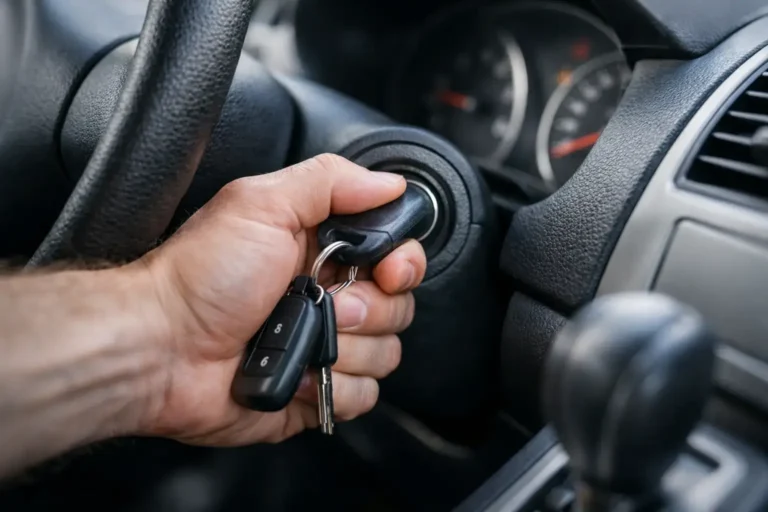
A basic metal key may look right and even turn the ignition, but the engine can still refuse to start if the vehicle does not detect the correct transponder signal. That is where cloning or key programming comes in.
When Cutting Is the Right Service
Key cutting is commonly the right starting point when your key blade is worn, bent, broken, or missing. It is also necessary when you need a replacement key for a traditional ignition, an emergency insert key for a fob, or a duplicate for a vehicle that uses no transponder security.
It is especially useful when the original key is physically damaged but its electronic chip still works. A locksmith may be able to cut a fresh blade and transfer or program the needed electronic component, depending on the key design and vehicle.
Car Key Cutting Versus Cloning: The Core Difference
Cloning does not cut metal. It copies the electronic identity stored in a working transponder key or, in some cases, an eligible remote. The locksmith reads the data from the original chip and writes compatible data onto a new chip.
Think of it this way: cutting gives the key the right physical shape. Cloning gives its chip the right electronic credentials. A transponder-equipped vehicle usually needs both functions before a duplicate key can fully work.
The main advantage of cloning is speed when a working original is available and the vehicle uses a cloneable chip type. It can avoid some of the longer programming procedures associated with certain vehicles. The duplicate often starts the car as soon as the blade is cut and the chip data is copied.
Still, cloning is not automatically the best option. It depends on the vehicle’s year, make, model, key system, and the type of transponder chip. Some keys use encrypted technology that cannot be copied in a straightforward way. Others require the vehicle to be programmed directly with professional diagnostic equipment.
When Cloning Makes Sense
Cloning can be a practical choice if you have one fully working transponder key and want a spare before an emergency happens. It is often a fast solution for drivers who want a backup key for a family member, teenager, employee, or valet situation.
It can also be helpful when the vehicle has a standard transponder key rather than a high-security smart key. The locksmith first confirms that the chip is compatible with cloning. Then the key is cut, the transponder is copied, and both the remote functions and starting function are tested when applicable.
There is a trade-off. On some vehicles, a cloned key shares the same electronic identity as the original. If you later lose one key, the vehicle may not be able to distinguish between the original and its clone. That may matter if you want the lost key removed from the vehicle’s authorized key list for security reasons.
In that situation, programming a new, unique key into the car may be the better route. A professional locksmith can explain whether your vehicle allows separate key identification and whether deleting lost keys is available.
Why Newer Keys Often Need Programming Instead
Modern vehicle keys are more than metal blades and small chips. Many include remote buttons, proximity detection, rolling security codes, encrypted transponders, and push-button start authorization. These systems are designed to reduce theft, which also means duplication is more involved.
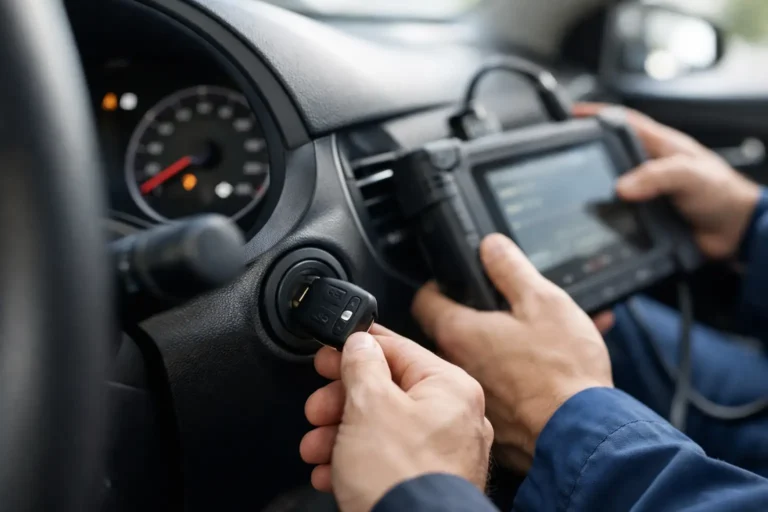
A smart key or key fob may need to be programmed to the vehicle rather than cloned. The locksmith connects the proper equipment, follows the manufacturer’s procedure, and verifies that the car recognizes the new key. Depending on the model, this may involve security access, PIN retrieval, or adding the new key through the vehicle’s onboard system.
Programming is also often necessary when all keys are lost. Without a working key to copy, cloning is not possible. The locksmith must create a replacement key, cut the emergency blade if needed, and program the key or fob to the vehicle.
This is why a quick hardware-store duplicate is not always a solution. It may copy the metal pattern, but it cannot necessarily handle the transponder, remote, or immobilizer system your vehicle depends on.
What Happens If You Choose the Wrong Option?
The most common result is a key that opens the door but does not start the engine. You may see a flashing security light, a no-start condition, or a message that the key is not detected. In other cases, the key may start the vehicle but the remote buttons will not lock, unlock, or open the trunk.
Poorly cut keys can cause another problem: wear inside the ignition or door lock. A key that sticks, needs to be forced, or only works when wiggled should be checked promptly. Continuing to use it can lead to a broken key, a damaged ignition, or a lockout at the worst possible time.
The right locksmith does not guess. They identify the key type, confirm the vehicle’s security requirements, inspect the existing key when available, and test the finished key before leaving.
The Best Choice Depends on Your Situation
If you have a working key and drive an older vehicle or one with a compatible transponder, cutting and cloning may be a fast, cost-conscious solution. If you have a newer vehicle, a push-button start system, a lost key, or concerns about a missing key still working, professional programming is usually the safer answer.
Your vehicle’s condition matters too. A worn key can sometimes be copied with the same worn pattern, creating a duplicate that works poorly. When that happens, cutting from the factory key code or decoding the lock can provide a more accurate result than copying the old blade.
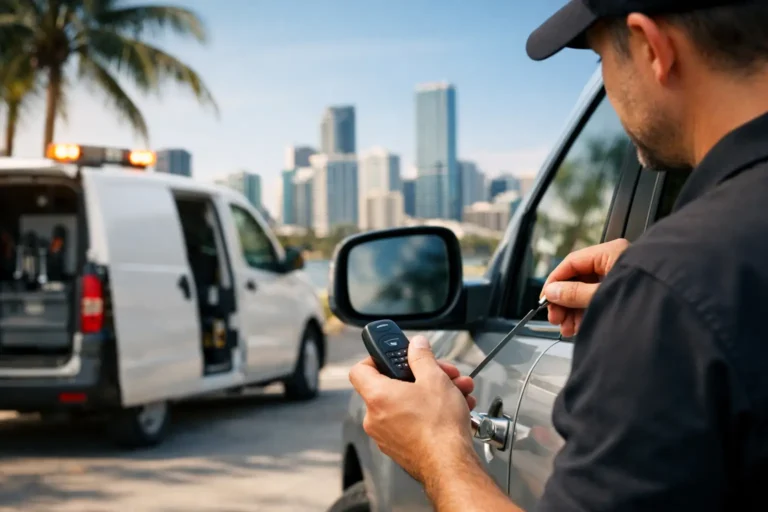
For Miami-Dade drivers, a mobile automotive locksmith can handle many of these jobs where the vehicle is parked. That means no tow truck, no waiting at a dealership, and no trying to figure out how to get a non-starting car across town. Precise Locksmith LLC can assess the key system on-site and provide the service your vehicle actually needs.
Before You Request a Duplicate Key
Have your vehicle year, make, and model ready, along with your VIN if available. Let the locksmith know whether you have a working key, whether the key has remote buttons, and whether your vehicle uses a traditional ignition or push-button start. Proof of ownership and identification may be required before replacement or programming work begins.
If your current key is cracked, intermittently working, or difficult to turn, do not wait until it fails completely. Getting a tested spare while one key still works is usually simpler than replacing every key after a loss.
A dependable duplicate is not just about having another piece of metal in a drawer. It is about knowing that when your car needs to start, unlock, and get you moving, the key in your hand is made for the job.