How to Remove a Stuck Key From a Car Ignition
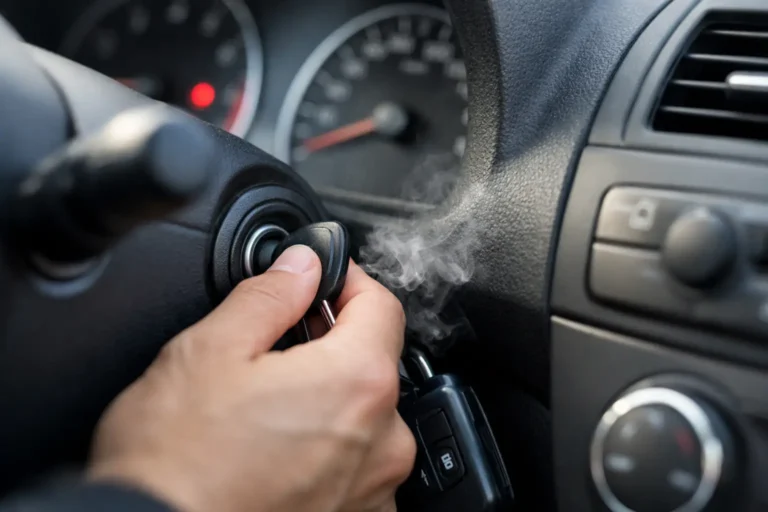
A key that will not come out of the ignition can stop an ordinary Miami errand in its tracks. Your battery may stay on, the car may be stuck where it is, and every extra pull can turn a manageable key problem into a broken key or damaged ignition. If you are searching for how to remove stuck key safely, start by slowing down. The goal is to release the key without twisting, snapping, or forcing the parts around it.
In many cases, the cause is simple: the vehicle is not fully in Park, the steering wheel is locked under pressure, or the key itself is worn. In other cases, the ignition cylinder or shift interlock needs professional repair. Knowing the difference can save time and prevent a much larger repair.
Before You Try to Remove a Stuck Key
First, put the vehicle in a safe position. Set the parking brake firmly and make sure you are not blocking traffic. If the engine is running, do not leave the vehicle unattended while you test the key. Avoid using pliers, screwdrivers, coat hangers, or excessive force. Those tools can bend the key blade, break it inside the ignition, or damage the steering column.
Take a quick look at the key. If it is bent, cracked, badly worn, or attached to a heavy keychain, do not keep working it back and forth. A weak key can break with very little pressure. Remove heavy accessories from the keyring before trying the steps below.
If your key is already broken in the ignition or door lock, stop immediately. Pushing the broken piece deeper often makes extraction harder. A mobile automotive locksmith can remove it with the proper extraction tools and check whether the ignition has been damaged.
How to Remove a Stuck Key From the Ignition
Confirm the transmission is fully in Park
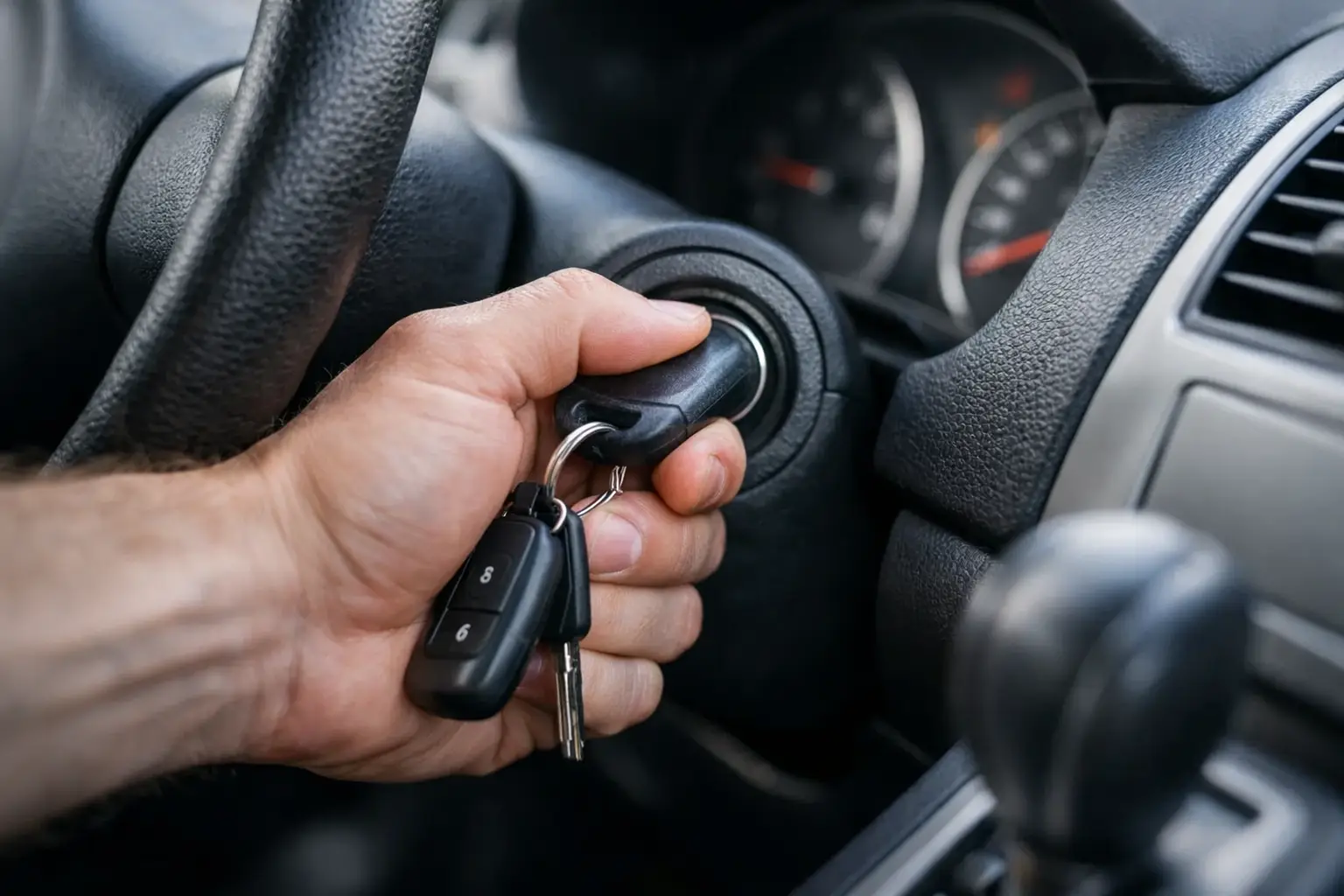
On many automatic vehicles, the ignition will not release the key unless the shifter is completely in Park. Press the brake pedal, move the shifter firmly into Park, and then gently move it slightly forward and back while holding it in Park. At the same time, turn the key toward the off position and try to remove it.
Do not force the shifter. If it feels loose, will not settle into Park, or the key only releases when you hold the shifter in a certain spot, the shift interlock may be failing. That is a repair issue, not a reason to keep pulling on the key.
Relieve pressure on the steering wheel
A locked steering wheel is one of the most common reasons a key seems stuck. This often happens after parking with the wheels turned or after the steering wheel locks against the curb.
Hold the key gently in the off position. With your other hand, turn the steering wheel left and right. One direction may be tight, while the other has a small amount of movement. Apply steady pressure in the direction that moves while lightly turning the key toward off. When the steering lock releases, the key may come out normally.
Use controlled pressure only. If the wheel and key will not move after a few careful attempts, do not muscle them. Too much force can damage the key, ignition cylinder, or steering lock components.
Make sure the key is in the true off position
Some ignitions have a small position between accessory and off. The engine may be off, but the key can remain trapped until the cylinder rotates fully back. Gently turn the key back toward off, then press it in slightly and ease it out. Do not yank it.
If you have a push-button start vehicle with an emergency mechanical key, the issue may be in the door lock rather than the ignition. The same rule applies: keep the key straight and avoid twisting it sideways.
Use a dry lock lubricant only when appropriate
If the key turns but feels rough, a small amount of dry graphite or a lock-specific dry lubricant may help a dirty ignition cylinder. Apply it sparingly and follow the product directions. Insert and remove the key gently a few times.
Do not spray oil, grease, household lubricant, or penetrating fluid into a modern vehicle ignition. These products can collect dirt, gum up small internal parts, and make the problem worse later. Also avoid spraying anything into an electronic key fob or smart-key slot.
When the Key Is Stuck in the Car Door Lock
A stuck key in the door requires a slightly different approach. Weather, corrosion, dirt, and a worn lock cylinder are common causes. Keep the key level with the lock and try a small, gentle movement toward the locked and unlocked positions. Do not bend the key upward, downward, or sideways.
If the lock is frozen, do not use hot water. It can refreeze and create additional problems. A lock de-icer designed for vehicle locks may help, but if the key is already binding hard, professional service is the safer call.
Modern car door locks can be delicate, especially on vehicles that mostly use remote entry. A lock cylinder that has not been used in years may be dry or corroded. Forcing a key into it can break internal wafers or snap the key blade.
What Not to Do With a Stuck Car Key
The fastest way to turn a stuck key into a bigger emergency is to force it. Avoid these common mistakes:
- Do not pull the key with pliers or vice grips.
- Do not strike the key, ignition, steering column, or door lock.
- Do not twist a bent or cracked key harder to make it release.
- Do not pour oil or household chemicals into the ignition.
- Do not try to drill the ignition or take apart the steering column at the roadside.
A modern ignition is not just a mechanical cylinder. It may work with an immobilizer chip, transponder system, steering lock, shift interlock, and vehicle electronics. A quick DIY shortcut can create a no-start condition or require replacement parts that were not originally needed.
Signs You Need a Locksmith Now
Call for professional help if the key will not turn, will not return to off, feels loose in the ignition, or only comes out with repeated shifter movement. You should also stop and call if the key is bent, cracked, broken, or if the steering wheel remains locked after careful pressure relief.
A qualified automotive locksmith can diagnose whether the issue is the key, ignition cylinder, steering lock, shift interlock, or door lock. Depending on the vehicle and the problem, the technician may extract the key, cut a replacement, repair the ignition, program a transponder key, or restore access on-site.
For drivers in Hialeah, Doral, Miami Lakes, Miami Gardens, Opa-Locka, and nearby Miami-Dade areas, a mobile service matters. You should not have to arrange a tow just to find out whether a worn key or damaged ignition is causing the problem. Precise Locksmith LLC can come to your location, assess the issue, and provide clear options before work begins.
Can You Drive With the Key Stuck?
It depends on where the key is stuck and whether the vehicle can be shut off safely. If the engine is running and the key will not turn to off, do not continue driving unless moving the vehicle is necessary to get out of immediate danger. A key trapped in the ignition can leave the battery running after you park, and the problem may worsen without warning.
If the car is off but the key remains trapped, do not leave the key in the vehicle if you can avoid it. You may not be able to lock the car securely, and a dead battery is possible if the ignition stays in accessory mode. Call for assistance rather than leaving the vehicle exposed for hours.
A stuck key is frustrating, but it is usually a warning sign that something needs attention. Give the simple, low-risk checks a careful try, then stop before force turns a small problem into a broken key or an expensive ignition repair. When the key will not release, getting an experienced mobile locksmith to your location is often the quickest way to protect your car and get your day moving again.