Broken Car Key Stuck in Ignition? Do This
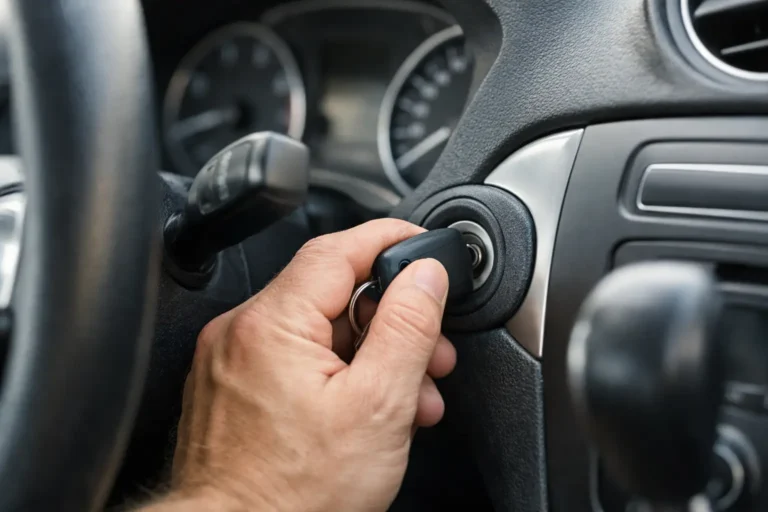
A broken car key stuck in ignition usually happens at the worst possible time – when you are already late, parked in the heat, or trying to get home after a long day. The first move matters. If you keep twisting, pulling hard, or jamming tools into the ignition, a simple key extraction can turn into ignition damage, steering lock trouble, or a bigger repair bill.
What to do first when a broken car key is stuck in ignition
Start by stopping. Do not force the remaining piece deeper into the ignition, and do not spray random lubricants into the keyway just because they are nearby. If the vehicle is still on, put it in park, set the brake, and turn off any accessories if you can do so safely.
Take a close look at what is actually stuck. Sometimes part of the key is still sticking out enough to grab. Other times the break happens flush inside the ignition, which changes the safest next step. If the steering wheel is locked hard to one side, lightly move the wheel left and right while gently trying to return the ignition to a neutral position. That can relieve pressure on the cylinder, but it only works when done gently.
If any piece of the key is visible, use steady fingers, not brute force. Needle-nose pliers or precision tweezers may help if there is enough of the blade exposed to grip. Pull straight out. Do not twist. If the key fragment is deep inside or keeps slipping, stop there.
Why car keys break in the ignition
Most people assume the key itself was weak, but that is only part of the story. Keys often break because something else was already going wrong. Wear is a big one. A metal key that has been used for years gets thin at stress points, especially near the shoulder and grooves.
The ignition may also be part of the problem. Dirt inside the cylinder, worn wafers, poor alignment, or internal damage can make the key bind when you insert or turn it. If you have noticed the key sticking lately, needing a jiggle, or refusing to turn smoothly, the break was probably building up for a while.
Heavy keychains add stress too. A ring packed with house keys, tags, and accessories puts extra downward pull on the ignition while you drive. Over time that can wear both the key and the ignition cylinder faster than most drivers realize.
Signs the ignition may be damaged too
A clean extraction does not always mean the problem is over. If the key broke because the ignition is worn, the same issue can happen again with your spare. Watch for warning signs like rough turning, the key getting stuck in accessory mode, needing to wiggle the key to start the car, or the key refusing to come out cleanly after driving.
If any of that sounds familiar, extraction alone may not be enough. The safer fix may be ignition repair, cylinder service, or a replacement key cut to code instead of copying a worn key.
What not to do
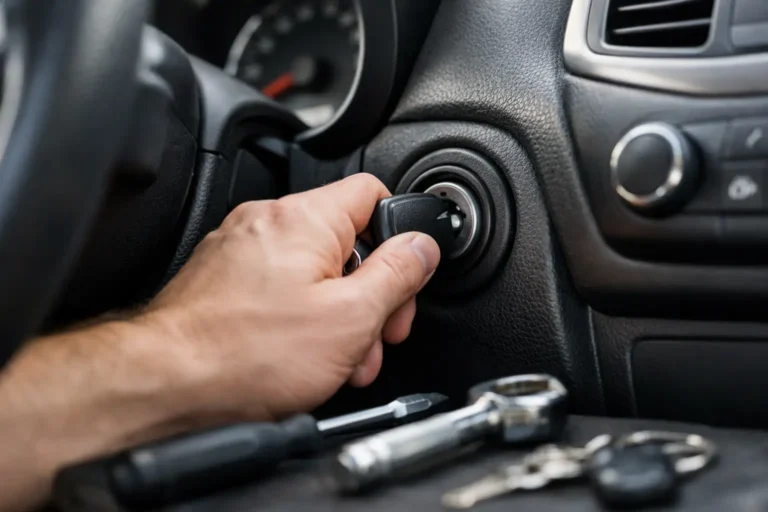
This is where people accidentally turn a locksmith job into a mechanic job. Do not shove a paperclip, bobby pin, knife tip, or screwdriver into the ignition. Those tools can bend internal parts or push the broken piece farther in.
Do not flood the ignition with glue, household oil, or thick lubricant. Super glue tricks are risky even when they work online. In real cars, glue can spread inside the cylinder and bond moving parts. That can leave you needing ignition replacement instead of simple removal.
Do not keep trying the same failed move over and over. If the key does not come out after one careful attempt, more force rarely helps. It usually makes extraction harder.
When you can try a simple removal
There are a few cases where a careful do-it-yourself attempt makes sense. If the broken piece is clearly visible, the ignition is not under tension, and you can grip the key without pushing it deeper, you may be able to remove it. Good lighting helps. So does patience.
A broken key extractor tool is safer than improvised metal objects because it is designed to catch the cuts on the blade and pull the fragment out without expanding the damage. But even with the right tool, success depends on how deep the key is, whether the ignition is worn, and whether the fragment broke at an angle.
If you get the piece out, do not assume you are done. Check the rest of the key. If it snapped from metal fatigue, your duplicate may already be close to failing too. This is the right time to get a fresh key made from the proper code or a less worn pattern.
When to call a locksmith right away
If the broken key is flush inside the ignition, the ignition will not turn, the steering wheel is locked, or the vehicle uses a chipped or laser-cut key, calling a locksmith is the smart move. Modern vehicle keys are not just pieces of metal. Many include transponder chips, remote functions, or high-security sidewinder cuts that need the right equipment and the right hands.
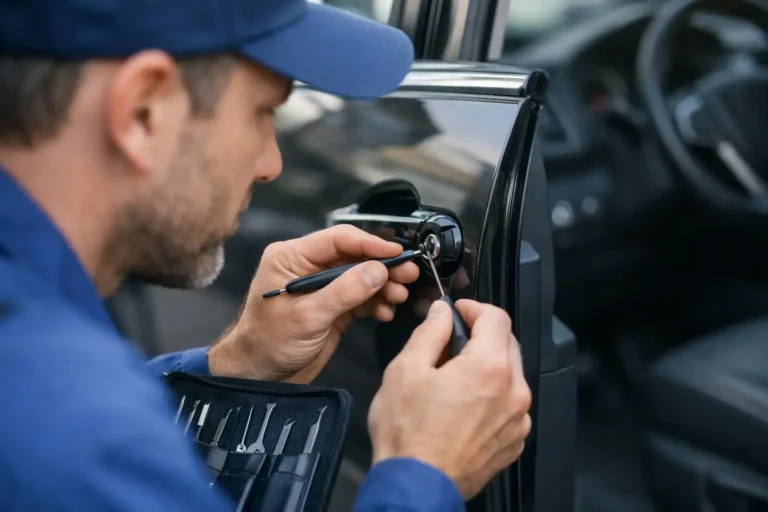
A mobile automotive locksmith can usually handle the problem on-site. That matters when your car is stuck in a parking lot, at work, at home, or on the side of the road. Instead of towing the car and waiting on multiple shops, the technician comes to you, removes the broken piece, checks the ignition, and cuts or programs a replacement if needed.
For drivers in a rush, that is often the difference between losing a full day and getting back on the road fast.
How a professional removes a broken car key stuck in ignition
The process is more precise than most people expect. First, the locksmith confirms the vehicle make, model, and key type. Then the ignition is checked for tension, internal wear, and visible obstruction. Specialized extractors are used to remove the key fragment without grinding or prying against the cylinder.
Once the fragment is out, the keyway is tested. If the ignition is working normally, the next step is cutting a new key that matches the lock correctly. If the car uses a transponder key or smart key system, programming may be needed too.
If the ignition shows damage, the technician can often repair or replace components on-site depending on the vehicle and the severity of the issue. That is a major reason people call a mobile service instead of trying to force a temporary fix.
Why copying a worn key can backfire
A lot of drivers ask for a duplicate from the broken key or from an old spare. Sometimes that works, but sometimes it copies the wear along with the pattern. If the existing key is rounded off or slightly bent, the duplicate may still stick or turn poorly.
The better fix is often cutting a new key to factory specs when possible. That gives the ignition a cleaner match and reduces the chance of another break.
The cost question most drivers ask first
Price depends on what actually failed. A simple extraction is usually less expensive than ignition repair or key programming. The vehicle type matters too. An older standard metal key is different from a late-model transponder or high-security key.
What matters more than the cheapest quote is whether the service solves the whole problem. If someone removes the fragment but ignores a failing ignition, you may be calling again soon. A good locksmith tells you whether you need extraction only, a replacement key, ignition service, or all three.
That straightforward approach is what drivers want in an emergency – fast answers, clear pricing, and work done where the vehicle is parked.
How to lower the chance of it happening again
If your key has visible cracks, bending, or deep wear marks, replace it before it snaps. If the ignition has been sticking, address it early. And if your key ring weighs as much as a toolbox, lighten it.
Use a smooth, unworn key whenever possible, and keep a second working key available. Waiting until the only key breaks inside the ignition is when a preventable problem becomes urgent.
For drivers who need help fast, especially when the car will not start or the key fragment is buried inside, a mobile automotive locksmith can usually save time, stress, and unnecessary towing. Precise Locksmith LLC handles these calls with on-site service, and that matters when the problem is happening right in front of you, not on a schedule.
If your key broke in the ignition, treat the situation gently, not aggressively – the right next step can save the lock, the ignition, and your whole afternoon.