Dead Car Battery Locked Doors? What to Do
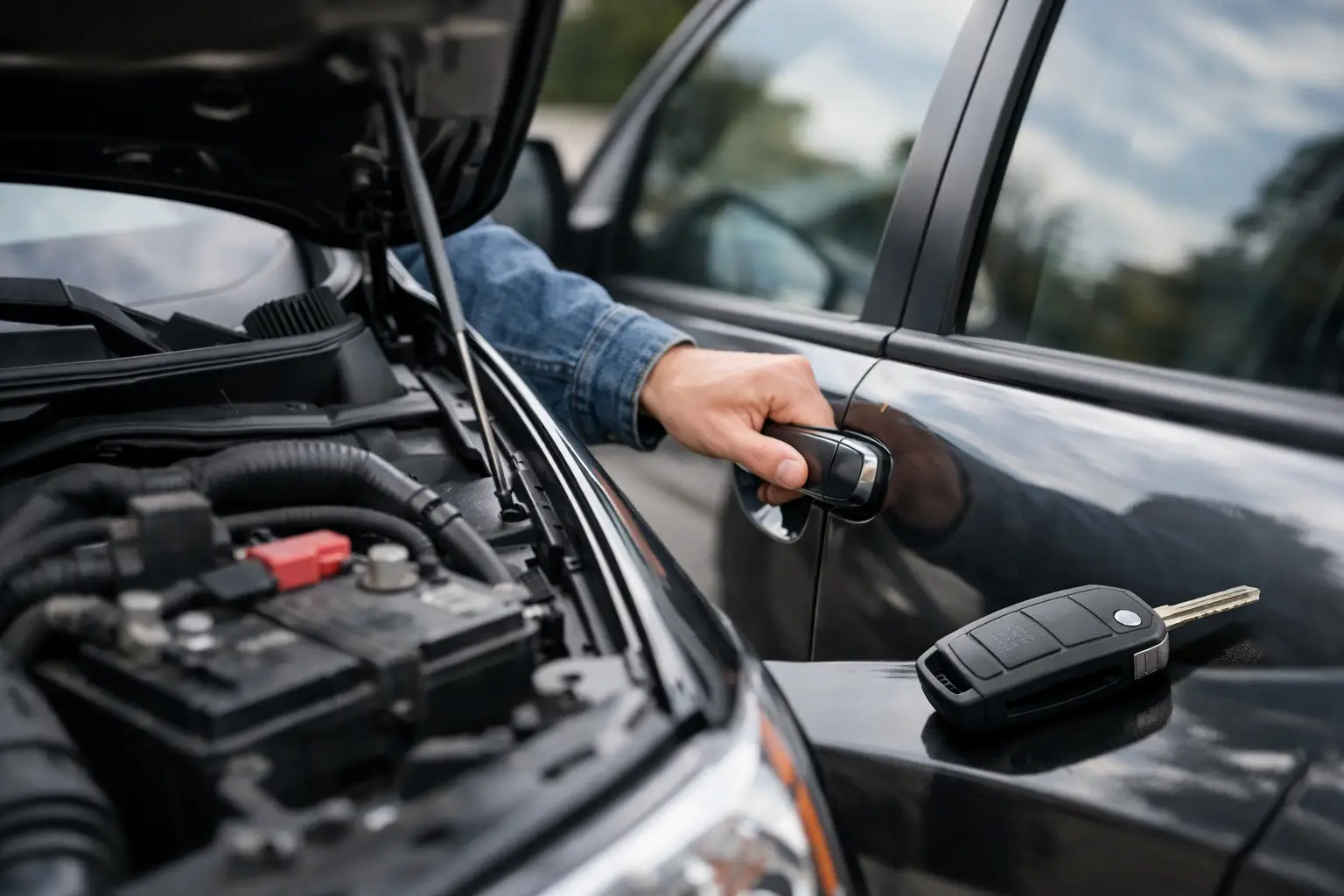
You walk up to your car, hit the fob, and get nothing. No lights. No click. No response. When a dead car battery locked doors situation happens, it feels bigger than a battery problem because now you cannot even get inside to pop the hood, grab your charger, or get moving.
This is one of the most common emergency calls drivers make, especially when they are already late, parked in a tight spot, or dealing with bad weather. The good news is that locked doors with a dead battery usually have a fix. The bad news is that the right fix depends on your vehicle, your key type, and whether the lock itself still works.
Why dead car battery locked doors happens
Most drivers assume power locks are the only issue. In reality, several things can cause the doors to stay shut after the battery dies.
On many newer vehicles, the key fob handles almost everything until the battery fails. Once the car battery is drained, the remote will not communicate the way you expect, and if you have never used the physical key inside the fob, you may not even realize it is there. That is very common.
There is also the mechanical side. A manual door lock should still open with the emergency key even if the battery is dead, but years of non-use can leave that key cylinder stiff, dirty, or partially seized. In other words, the battery may be dead, but the lock problem is mechanical.
Some vehicles add another layer. If the battery is weak, not fully dead, or the car has an electronic fault, the system can act unpredictably. One door may respond while another stays locked. The trunk may open while the driver door does not. That is why a quick guess does not always solve it.
First steps when your car battery is dead and doors are locked
Start with the key fob itself. If the car battery is dead, the fob may still have enough power to send a signal, but if the fob battery is also weak, you are dealing with two failures at once. Press unlock from very close to the driver door and then from near the trunk. Some vehicles have better antenna response at certain points.
Next, look for the mechanical key inside the fob. Many smart keys have a small release tab that slides out a hidden metal key. Use that key at the driver door, not by forcing it fast, but by applying steady pressure. If it does not turn easily, stop before you bend or snap it.
If the key enters but does not turn, a stuck lock cylinder may be the issue. That does not mean the key is wrong. It often means the cylinder has not been used in years because the remote has done all the work.
Try another access point if your vehicle has one. Some models have a mechanical lock at the passenger door, trunk, or even behind a small cover near the handle. Your owner’s manual would confirm that, but in an emergency most people do not have time to search through paperwork.
What not to do
This is where expensive damage happens. Drivers get frustrated, assume they are out of options, and start prying.
Do not jam a screwdriver, coat hanger, butter knife, or random metal strip into the door frame. Modern cars have tighter tolerances, side curtain airbags, sensitive weather stripping, and electronics inside the door. A bad attempt can leave you with scratched paint, bent trim, broken clips, torn seals, or a damaged lock rod.
Do not keep twisting a key that feels wrong. If the emergency key is bending under pressure, stop. A broken key in the lock turns one problem into two.
Do not assume a jump start is possible before entry. Some drivers ask if they can jump the battery from outside the car. On some vehicles there may be remote jump points under the hood or in a fuse area, but if the hood release is inside the locked cabin, that does not help much.
Can a locksmith open a car with a dead battery?
Yes. This is a standard automotive locksmith call, and it is usually faster and safer than trial-and-error methods.
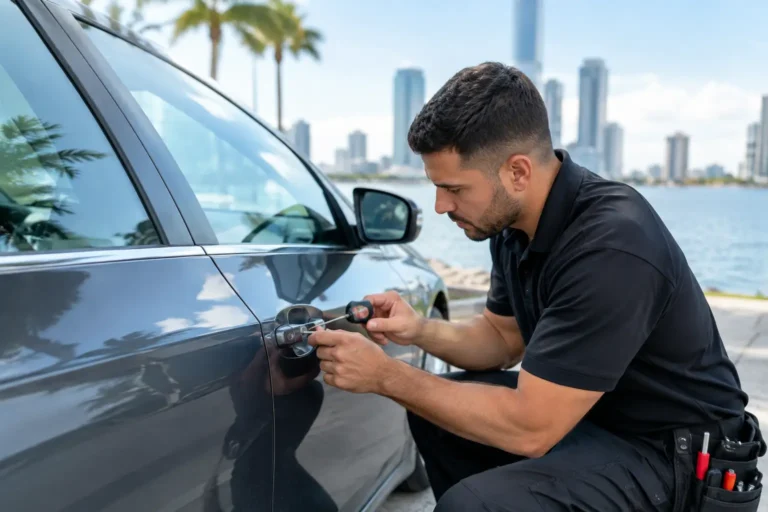
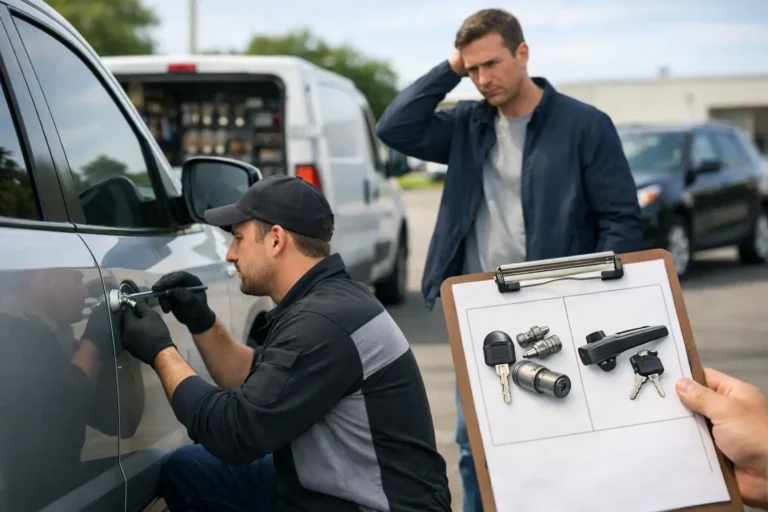
A professional locksmith approaches a dead car battery locked doors issue by first identifying what type of lock system the vehicle uses. If the emergency key should work but does not, the technician can test whether the problem is the cylinder, the key, or the linkage. If non-destructive entry is needed, proper tools can open the vehicle without prying the door apart or damaging the lock.
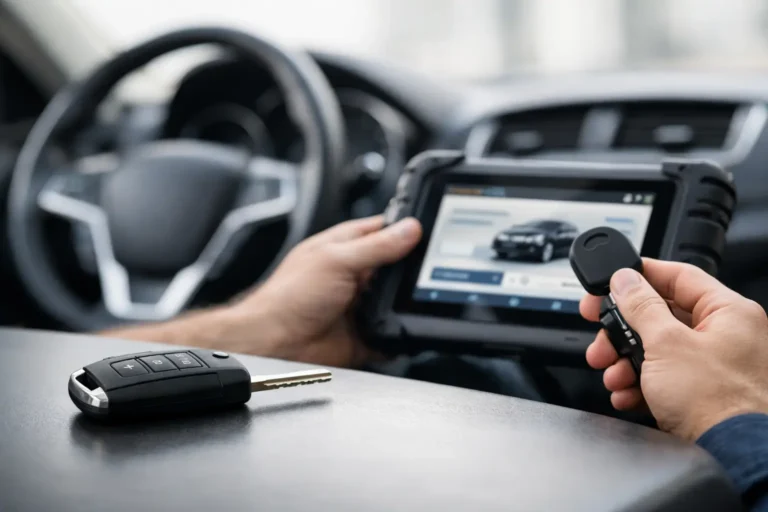
This matters more on newer cars. Many late-model vehicles have anti-theft features, shielded linkages, and tighter internal layouts that make amateur methods unreliable. A trained mobile locksmith can usually access the car on-site and then help with the next step, whether that means reaching the hood release, retrieving keys, addressing a broken lock, or cutting and programming a key if needed.
When the issue is not just the battery
Sometimes customers call because the battery is dead, but the real problem is a failed key, damaged lock cylinder, or worn ignition system.
If your physical key will not turn in the door and also feels rough in the ignition, the key blade may be worn. If the key turns but nothing happens at the lock, the cylinder or internal linkage may be damaged. If the fob works only sometimes, the problem may be a weak fob battery, failing programming, or a vehicle-side receiver issue.
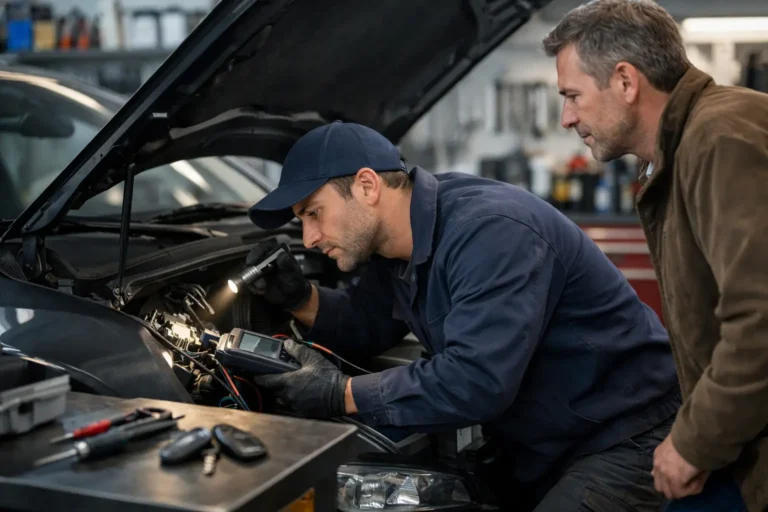
That is why the fix is not always a jump start. Entry comes first. Then the actual fault has to be diagnosed so you do not get locked out again the next day.
Why this happens more often than drivers expect
South Florida heat is hard on batteries. Short trips, long idle times, older batteries, and vehicles that sit for days can all speed up battery failure. Add in key fobs that rarely get used manually, and you have a setup where the first sign of trouble is a complete lockout.
Another factor is false confidence in the remote. Many drivers never test the hidden key or the manual door lock until an emergency happens. By then, the cylinder may be stiff from disuse. The system did not fail all at once. It just stayed unnoticed until you needed it.
What a mobile locksmith can do on-site
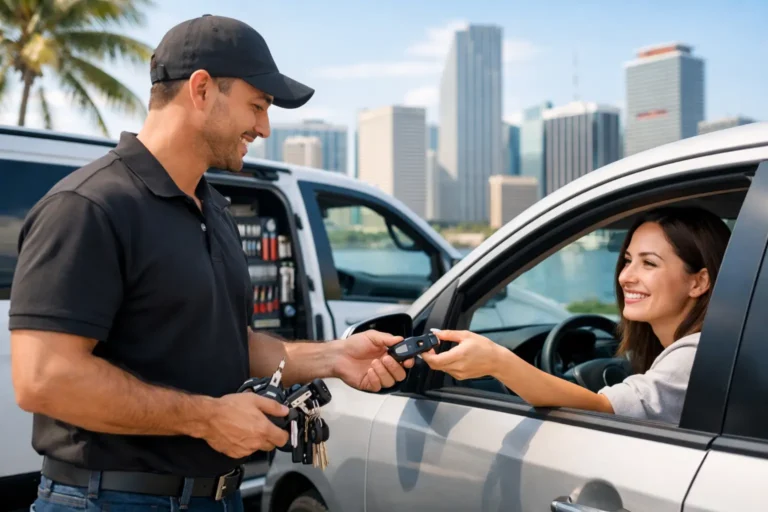
A good automotive locksmith does more than pop a door and leave. In many cases, the technician can verify whether the key is correct, open the vehicle without damage, inspect the lock operation, remove a stuck key, repair a problem cylinder, or provide a replacement key if yours is lost or broken.
For drivers who are stranded at work, at home, in a parking garage, or on the side of the road, mobile service matters. You do not need a tow just to get basic access. That saves time, money, and a lot of frustration.
If you are in Miami-Dade and dealing with this kind of lockout, Precise Locksmith LLC handles these emergency calls with on-location automotive service so drivers can get help where the car is, not after a shop visit.
When to call right away
If your child, pet, phone, medication, work equipment, or house keys are inside the car, do not spend 45 minutes experimenting. The same goes for unsafe locations, late-night lockouts, storm conditions, or situations where the key is stuck in the lock and getting worse.
Call a mobile locksmith if the hidden key will not turn, the lock feels seized, the trunk is the only point with a cylinder, or your vehicle uses a smart key system and you are not sure what backup method applies. Waiting rarely improves any of those problems.
A few smart habits that prevent the next lockout
Once you are back inside, it is worth taking two minutes to avoid a repeat. Replace an aging battery before it fails completely. Check the fob battery if the range has dropped. Test the manual key and door cylinder occasionally so you know it still works. If your only key is worn, cracked, or unreliable, get a duplicate made before it becomes an emergency.
Those small steps are cheaper than a tow, faster than being stranded, and easier than dealing with a lockout in the middle of a busy day.
A dead battery is stressful enough. When it also leaves your doors locked, the fastest solution is usually the safest one – get help from someone who works on vehicle entry every day and can solve the problem without turning a lockout into body damage or a broken key.
We provide mobile locksmith service throughout